
Why Advanced Access Systems Are Replacing Traditional Keys in 2026
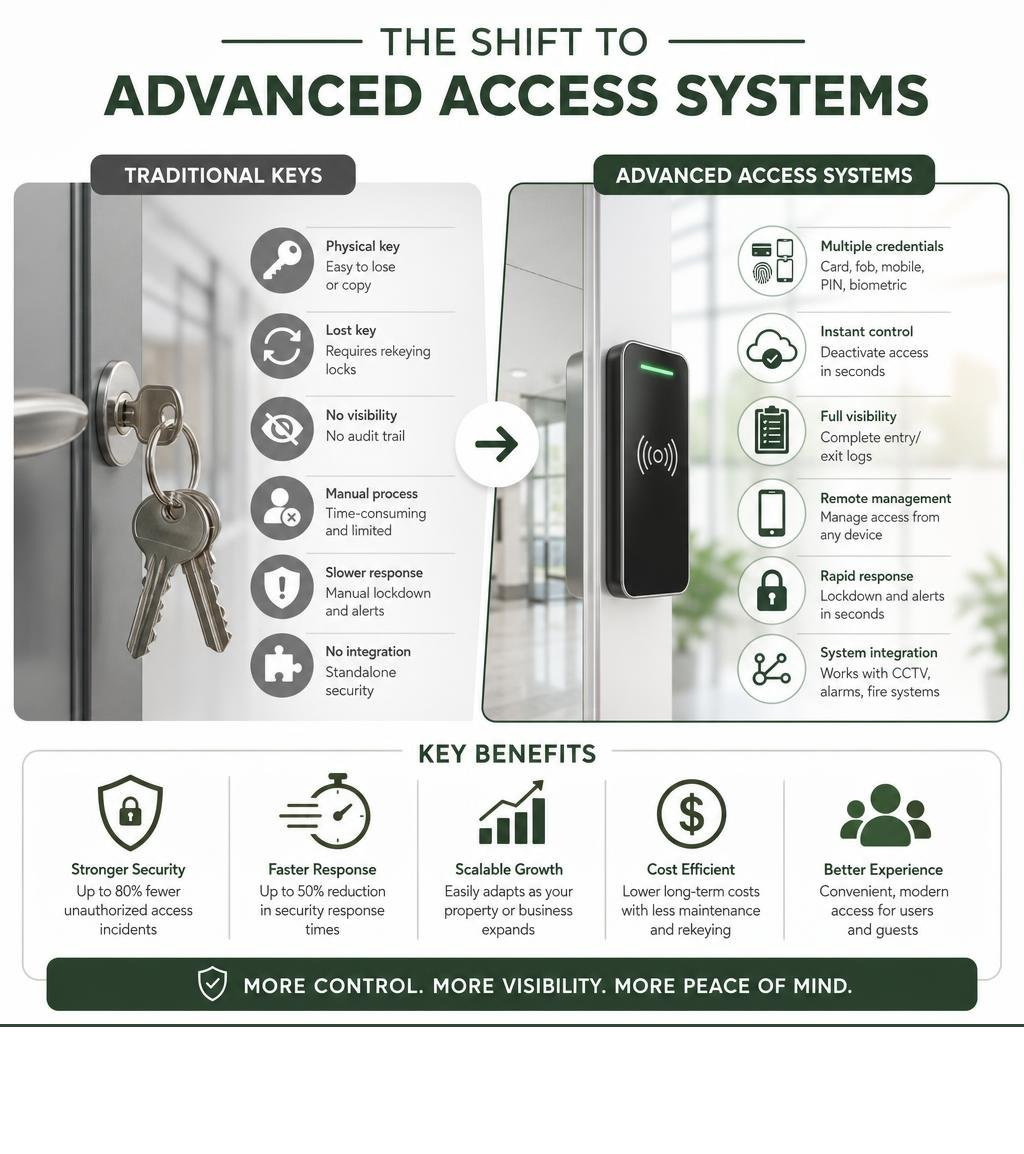
Advanced access systems are electronic security solutions that control, monitor, and manage who can enter a space — replacing traditional keys with smart credentials like keycards, mobile apps, PIN codes, and biometrics.
Here’s a quick overview of what they include and why they matter:
| Feature | Traditional Keys | Advanced Access Systems |
|---|---|---|
| Credential type | Physical key | Card, fob, mobile, biometric |
| Lost credential | Rekey locks | Instant deactivation in software |
| Audit trail | None | Full entry/exit log |
| Remote management | Not possible | Yes, from any device |
| Emergency lockdown | Manual | Mobile app, seconds |
| Integration | None | CCTV, alarms, fire systems |
The global access control market is growing fast — from $10.42 billion in 2023 to a projected $21.17 billion by 2030. That’s a 10.6% annual growth rate, driven by demand from commercial buildings, healthcare facilities, residential communities, and parking operators.
It’s not hard to see why. Facilities with advanced access control report up to 80% fewer unauthorized access incidents and a 50% reduction in security response times compared to traditional methods.
For Gold Coast property owners and managers, the shift isn’t just about technology. It’s about control, visibility, and peace of mind — knowing exactly who enters your property, and when.
Advanced access systems word guide:
What Are Advanced Access Systems?
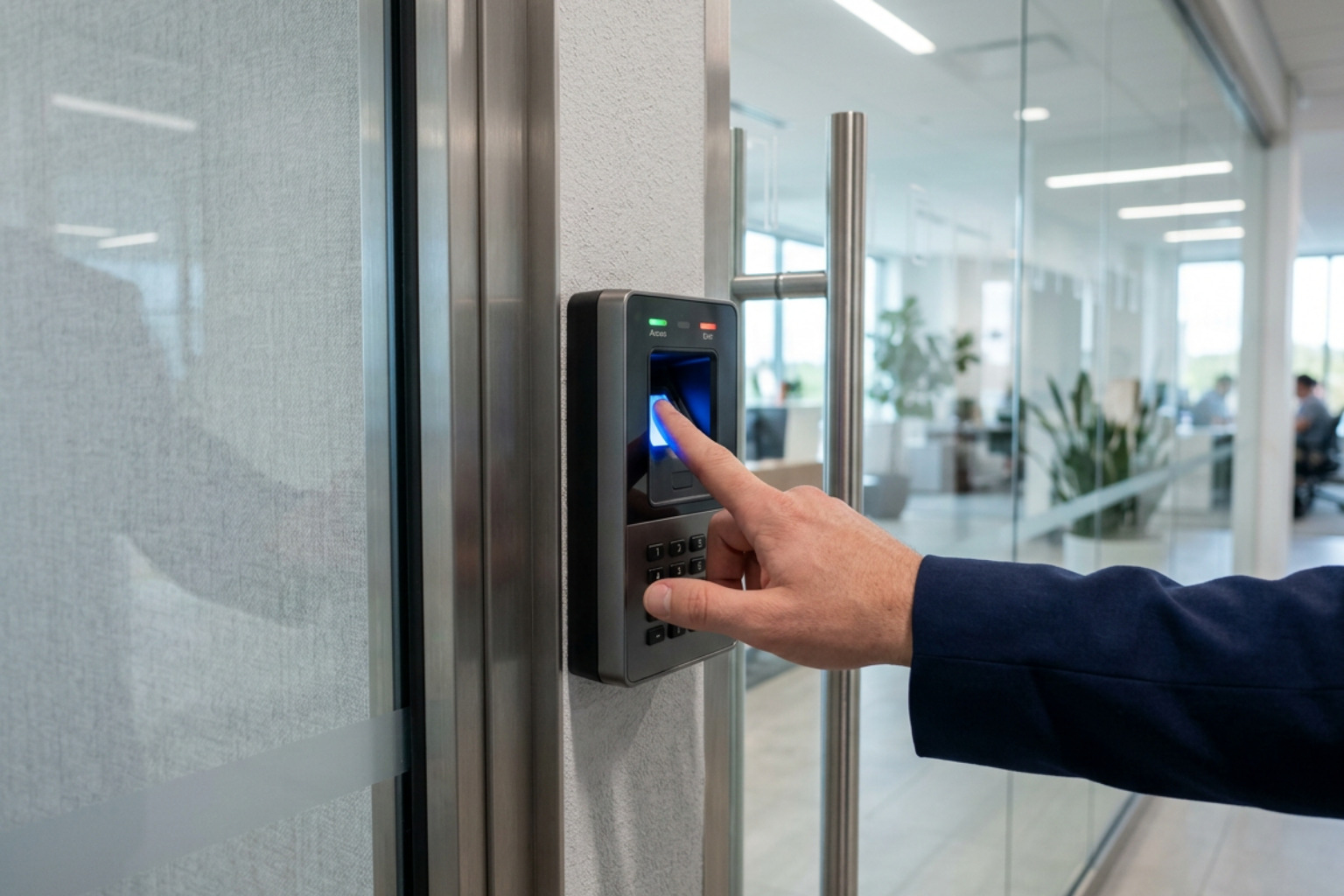
To understand advanced access systems, we have to look beyond the simple lock and key. At their core, these systems are enterprise-class IT platforms that manage physical entry across your entire facility. Instead of relying on a physical piece of brass that can be lost, duplicated, or stolen, these systems use digital permissions stored in a secure database to grant or deny access. For a neutral standards-based definition of access control, the NIST Computer Security Resource Center glossary is a useful reference.
When a person approaches a secured door in your Burleigh office or Currumbin medical centre, they present a credential. The system instantly verifies this credential against a set of rules-such as the time of day, the specific door, and the user’s authorization level-before releasing the electronic lock.
This modern approach dramatically reduces unauthorized access incidents by up to 80%. If an employee loses their card, we don’t need to spend thousands of dollars rekeying the entire building. Instead, we simply click a button in the management software to deactivate the lost card and issue a new one in seconds.
Furthermore, because these systems log every single event, security personnel gain real-time visibility. This instant data availability is why facilities utilizing these advanced platforms experience a 50% reduction in security response times during an incident. For a deeper dive into the terminology behind these setups, check out our guide on Access Control Systems Terms Demystified.
The Evolution of Advanced Access Systems
Physical security has come a long way from the mechanical master key systems of the past. The evolution of advanced access systems has moved through several distinct phases:
- Standalone Electronic Locks: Simple digital keypads or card readers that operated independently on individual doors, requiring manual programming at each lock.
- On-Premise Networked Systems: Connected systems managed by a dedicated local server. While they allowed central management, they required heavy cabling and regular on-site IT maintenance.
- Cloud-Based Access Control: The modern standard in 2026. These systems eliminate the need for on-site servers, allowing property managers from Tugun to Elanora to manage permissions from any web browser or smartphone.
- Mobile-Enabled Access: Utilizing Bluetooth, NFC, and mobile apps to turn smartphones into secure credentials, removing the need for physical cards entirely.
This digital shift has unlocked incredible convenience for local businesses. To see how these modern systems are transforming properties in our local area, read about how to Unlock The Secrets Of Modern Miami Access Control.
Key Components of Advanced Access Systems
An advanced access control setup relies on several hardware and software components working in perfect harmony:
- Smart Credentials: These are the keys of the 2026 security landscape. They can be high-frequency RFID cards, mobile phone apps, or biometric markers like fingerprints and facial recognition. If you are curious about physical options, you can read Everything You Need To Know About Access Control Key Fobs.
- Smart Readers: Installed at entry points, these devices read credentials and transmit the encrypted data to the controller. Modern readers support multi-technology protocols, allowing you to use both old-school fobs and modern smartphones on the same door.
- Intelligent Controllers: The “brains” of the system. These panels make the actual split-second decision to unlock a door, often utilizing local caching so they continue to work even if the internet goes down.
- Cloud-Based Management Software: This is where you manage your users, set schedules, and view audit logs. Modern platforms run on secure cloud servers, meaning zero software to install on your local computers and seamless, automatic updates.
- Mobile Access Applications: Apps that allow users to open doors with a tap or a wave of their smartphone, while giving administrators the power to lock down facilities or grant remote access on the go.
For robust physical deployments, we often look to enterprise-grade hardware solutions to ensure the physical lock and reader components can withstand heavy-duty daily use.
Core Mechanisms: RBAC, DAC, and MAC
When designing an access strategy, we must decide how permissions are assigned and managed. Different organizational environments require different levels of control and flexibility.
| Access Control Model | Who Controls Access? | Best Used For | Key Benefit |
|---|---|---|---|
| Role-Based (RBAC) | System Administrator | Commercial offices, healthcare, schools | High operational efficiency; matches organizational structure |
| Discretionary (DAC) | Resource/Data Owner | Small offices, shared workspaces, files | High user empowerment and granular flexibility |
| Mandatory (MAC) | Central Security Authority | Government, military, research labs, prisons | Maximum security; non-negotiable permissions |
These strategies ensure that your physical security aligns perfectly with your operational needs, regulatory compliance, and data privacy policies.
Role-Based Access Control (RBAC)
Role-Based Access Control (RBAC) is the most popular strategy for modern commercial enterprises and healthcare facilities. Instead of assigning permissions to individual employees one by one, we assign permissions to specific roles within the organization (e.g., “Nurse,” “Doctor,” “HR Manager,” or “Night Cleaner”).
When a new staff member joins your team in Currumbin, you simply assign them their role, and they instantly inherit all the physical and digital access privileges associated with it. This drastically improves operational efficiency, reduces administrative errors, and ensures that staff only have access to the areas necessary to perform their daily duties.
Discretionary Access Control (DAC)
Discretionary Access Control (DAC) is a more flexible, user-centric approach. In a DAC model, the owner of a specific resource or space has the authority to grant access to others. For example, a department head might have the power to grant a temporary contractor access to their specific storage room or lab.
While DAC offers fantastic flexibility and user empowerment, it requires careful monitoring. Without strict oversight, it can lead to “permission creep,” where users retain access to areas they no longer need.
Mandatory Access Control (MAC)
Mandatory Access Control (MAC) is the most rigid and secure model available. In a MAC environment, access is determined by a central authority based on security clearances and strict classifications. Users cannot alter permissions or grant access to others under any circumstances.
This model is typically reserved for high-security environments like government facilities, research laboratories, and critical infrastructure where data privacy and absolute security are non-negotiable. Organizations looking to implement MAC often work with specialized security integrators to build highly compliant, zero-trust physical security perimeters.
Hardware, Software, and Integration Ecosystems

A truly intelligent access system doesn’t operate in a silo. The real magic happens when your access control integrates seamlessly with other building systems, creating a unified security ecosystem.

By linking these technologies, we can create automated safety workflows. For example, when a fire alarm is triggered, the access system can automatically release all emergency exit doors to allow safe evacuation. Simultaneously, the CCTV system can orient cameras toward the exit paths, while the intercom system broadcasts safety instructions.
Furthermore, integrating your access control with building automation allows you to save on energy costs. When the last employee swipes out of a zone in your Burleigh facility, the system can automatically turn off the lights and adjust the air conditioning. For complex external perimeters, integrating specialized peripheral technologies like vehicle scanners or turnstile access systems ensures that your physical boundaries remain completely secure in all weather conditions.
Cloud-Based vs. On-Premise Management
One of the biggest decisions you will make when upgrading your system is choosing between a cloud-based solution and a traditional on-premise server.
On-premise systems require a dedicated computer server running on your property. This means your IT team is responsible for backups, software updates, and cybersecurity patches.
In contrast, cloud-based digital security solutions run entirely in secure off-site data centres. This model offers several major benefits:
- Remote Management: Check logs, lock doors, or issue credentials from anywhere in the world via a smartphone app.
- Lower Total Cost of Ownership (TCO): No expensive servers to buy, maintain, or replace every few years.
- Automatic Updates: Security patches and software updates are pushed automatically with zero downtime.
- Scalability: Easily add new doors or entire new office locations across the Gold Coast or Northern NSW without needing to rebuild your network infrastructure.
If you run a retail shop or commercial space, implementing modern store access control via cloud infrastructure gives you complete oversight of your shopfront security without the headache of managing local IT hardware.
Elevator and Lift Access Control
For multi-story buildings, managing who can access which floor is a critical security requirement. Elevator access control stops unauthorized visitors from wandering through private office floors or residential apartments.
By installing readers inside the elevator car, we can restrict button presses based on the user’s credential permissions. A resident on floor 4 can only press the button for floor 4 and common areas like the lobby or rooftop pool.
To learn more about how to set up these vertical security systems, read our comprehensive guide on Mastering Elevator Access Control System Setup or discover how RFID is changing the game in our article Rfid In The Sky How Elevator Access Cards Are Revolutionizing Building Security.
Industry-Specific Applications and Benefits
Every industry faces its own unique physical security challenges. Fortunately, advanced access control solutions can be custom-tailored to solve these specific pain points.
- Commercial Facilities: Protect intellectual property, secure server rooms, manage cleaning staff schedules, and keep a clean digital audit trail for compliance and insurance purposes.
- Residential Communities & HOAs: Manage common facilities like gyms and pools, secure main entry gates, and provide residents with convenient smartphone entry while keeping unauthorized visitors out.
- Healthcare Facilities: Keep medicine storage bays locked down, protect patient privacy, and manage high-traffic visitor areas seamlessly using Role-Based Access Control.
- Parking and Vehicle Access: Automate parking garages, track vehicle entry, and secure loading zones.
Smart Parking and Vehicle Access
Managing vehicle entry is just as important as securing your front door. Modern vehicle access control combines physical barriers with smart digital technologies to create a seamless drive-through experience.
Using License Plate Recognition (LPR) cameras, systems can automatically read a vehicle’s plate as it approaches a gate. If the plate is registered in the database, the gate opens instantly—no need for the driver to roll down their window or swipe a card.
For commercial fleets or contract parking, we can also use Automatic Vehicle Identification (AVI) transponders. These RFID tags mount directly to the vehicle’s windshield and communicate with long-range readers at the gate.
Integrating these systems with robust physical hardware ensures reliable operation. By working with dedicated parking security integrators, we can design systems that handle high-volume traffic while maintaining absolute perimeter security.
Crisis Management and Emergency Protocols
In an emergency, every second counts. Traditional key systems require someone to physically run around a building with a brass key ring to lock doors—a process that is slow, dangerous, and prone to human error.
With modern access control, we can initiate a complete facility lockdown in seconds. Using a secure mobile app, authorized administrators can swipe a button to instantly lock every exterior door, secure classrooms, or isolate specific zones.
These systems also integrate directly with local fire panels. When a fire alarm is triggered, the access system automatically releases fail-safe locks on emergency exit paths, ensuring that people can escape safely while keeping secure zones protected from outside entry.
Frequently Asked Questions about Advanced Access Control
How do advanced access systems handle power outages?
Professional access control systems are designed with multiple layers of redundancy to ensure they keep working during a power grid failure:
- Battery Backups: Controllers are installed inside enclosures equipped with backup batteries. These batteries typically keep the readers, locks, and controllers running for several hours during an outage.
- Local Caching: The decision to unlock a door is made by the local controller panel, not a distant cloud server. This means that if your internet connection goes down, your doors will still unlock for authorized users as normal.
- Fail-Safe vs. Fail-Secure Hardware: We choose lock hardware carefully based on safety codes and security risks. Fail-safe locks (like magnetic locks) automatically unlock when power is lost, ensuring people can exit safely during an emergency. Fail-secure locks (like electric strikes or mortise locks) remain locked from the outside when power is cut, keeping the property secure while still allowing mechanical egress from the inside.
What are the main costs associated with upgrading to advanced access control?
When planning an upgrade, it is best to look at the total cost of ownership (TCO) over a 3-to-5-year period. The main cost components include:
- Hardware Installation: The upfront cost of readers, controllers, electronic locks, cabling, backup power supplies, and professional installation.
- Software Licensing: Cloud-based systems typically charge a small, predictable monthly subscription fee per door or per user to cover hosting, security updates, and remote management features.
- Maintenance & Support: Regular preventative maintenance checks to ensure physical locks, backup batteries, and readers are in perfect working order.
While the upfront investment is higher than traditional locks, you will save thousands of dollars over time by eliminating the need to rekey locks, replace lost physical keys, or hire on-site security guards to monitor entry points.
Can these systems integrate with existing legacy hardware?
Yes! You do not always have to rip out your entire existing setup to get the benefits of modern technology.
By utilizing a hybrid approach, we can install modern smart controllers that are backward-compatible with your existing cabling, electronic locks, or power supplies. This allows you to upgrade your software, add mobile smartphone entry, and improve your security database without paying to replace perfectly functional physical locks.
As experienced system integrators, we can assess your current setup and design a cost-effective, step-by-step upgrade path that fits your budget and timeline.
Conclusion
Upgrading to an advanced access control system is one of the smartest investments you can make for your Gold Coast property. It turns physical security from a daily administrative headache into a smooth, automated, and highly secure asset.
At Palm Beach Locksmiths, we have been securing the Gold Coast and Northern NSW regions for over 40 years. From emergency mobile locksmith services to designing and installing state-of-the-art electronic access control systems, we are your trusted, local “one-stop” security experts.
Whether your property is in Burleigh, Currumbin, Elanora, Tugan, Miami, or Tweed, our factory-trained technicians are ready to help you transition from traditional keys to smart, keyless security.
Ready to secure your business, residential community, or commercial facility? Explore our tailored Services/Access Control Systems or call us today to schedule your professional security consultation!