Why Elevator Access Control Is the Missing Layer in Your Building’s Security
Elevator access control is a system of hardware and software that restricts who can call, enter, or travel to specific floors in a building using credentials like key cards, mobile apps, PINs, or biometrics.
Quick answer — here’s what you need to know:
- What it does: Controls which floors each person can reach via the elevator
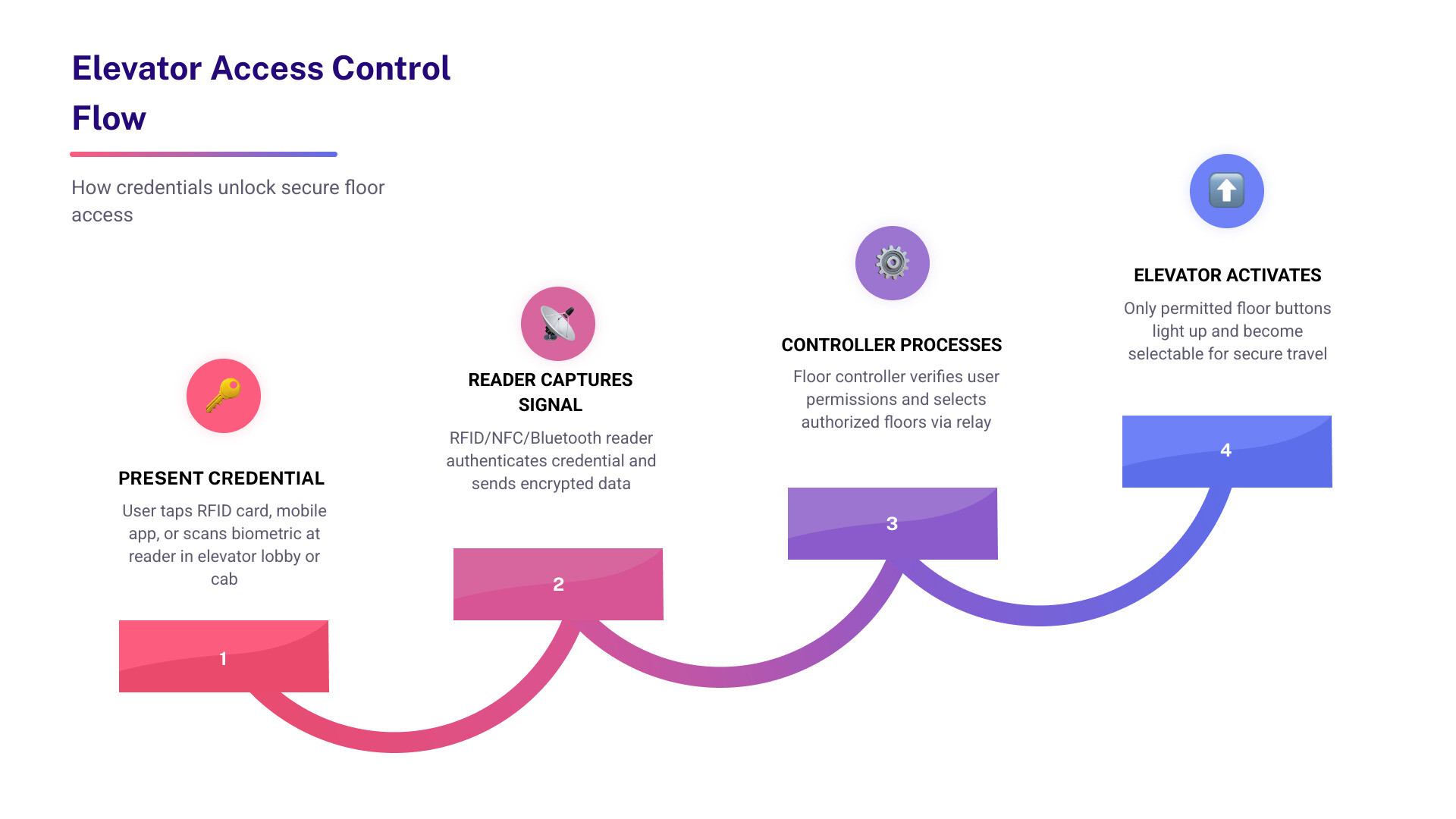
- How it works: A credential reader in the cab or lobby sends a signal to a controller, which activates or blocks the relevant floor buttons via relays
- Who needs it: Multi-tenant offices, residential towers, hotels, hospitals, and any building with restricted floors
- Common credentials: RFID cards, mobile apps (Bluetooth/NFC), PIN codes, biometrics
- Key benefit: Creates a full audit trail of who went where and when
Most buildings have a lock on the front door. Far fewer think carefully about what happens after someone steps into the elevator.
As one industry guide puts it: if a bad actor gets off at a restricted floor, they can cause serious harm before anyone even knows something is wrong.
Think of elevators as vertical doors. Every floor they stop at is an access point — and without the right controls, any of those access points can be exploited.
For Gold Coast property managers and business owners, this is especially relevant in multi-tenant buildings where different floors house different tenants, staff, or sensitive operations. A well-designed elevator access control system closes that gap cleanly and efficiently.
Why Implement an Elevator Access Control System?
When we talk to building managers from Tweed Heads up to Miami, the conversation often starts with a simple problem: “Too many people are wandering where they shouldn’t be.” While a locked front door is great, it doesn’t stop a visitor from accidentally (or intentionally) taking the lift to the executive suite or a restricted laboratory.
Implementing elevator access control offers several core benefits:
- Enhanced Security and Crime Deterrence: By treating the elevator as a series of “vertical doors,” you ensure that only authorized personnel can reach specific levels. This is a massive deterrent for opportunistic crime.
- Improved People Flow: Modern systems, especially those with destination dispatch, help manage traffic in busy towers. Instead of everyone cramming into the first lift that arrives, the system groups people going to the same floors together.
- Reduced Liability: In residential complexes or hotels, ensuring that guests can only access their own floor provides a significant safety net and peace of mind for residents.
- Floor-by-Floor Restrictions: You can get incredibly granular. For example, the accounting team can access the 3rd floor, while the IT department is restricted to the 5th. This Elevator Access Control Guide – Overview of Security Systems highlights how these systems act as a comprehensive security layer.
- Audit Trails: Ever wondered who was on the 10th floor at 2:00 AM? With these systems, you don’t have to guess. Every “swipe” or “tap” is logged, providing a digital paper trail that is invaluable for investigations or compliance audits.
- Multi-Tenant Management: If you manage a building with multiple businesses, you can give each tenant control over their own floor’s access without compromising the rest of the building.
For more information on how these fit into a wider security plan, check out our Access Control Systems page.
Key Components of elevator access control
Setting up a system like this isn’t just about sticking a card reader on the wall. It’s a coordinated dance between several pieces of hardware. If one part misses a step, your “vertical door” stays wide open.
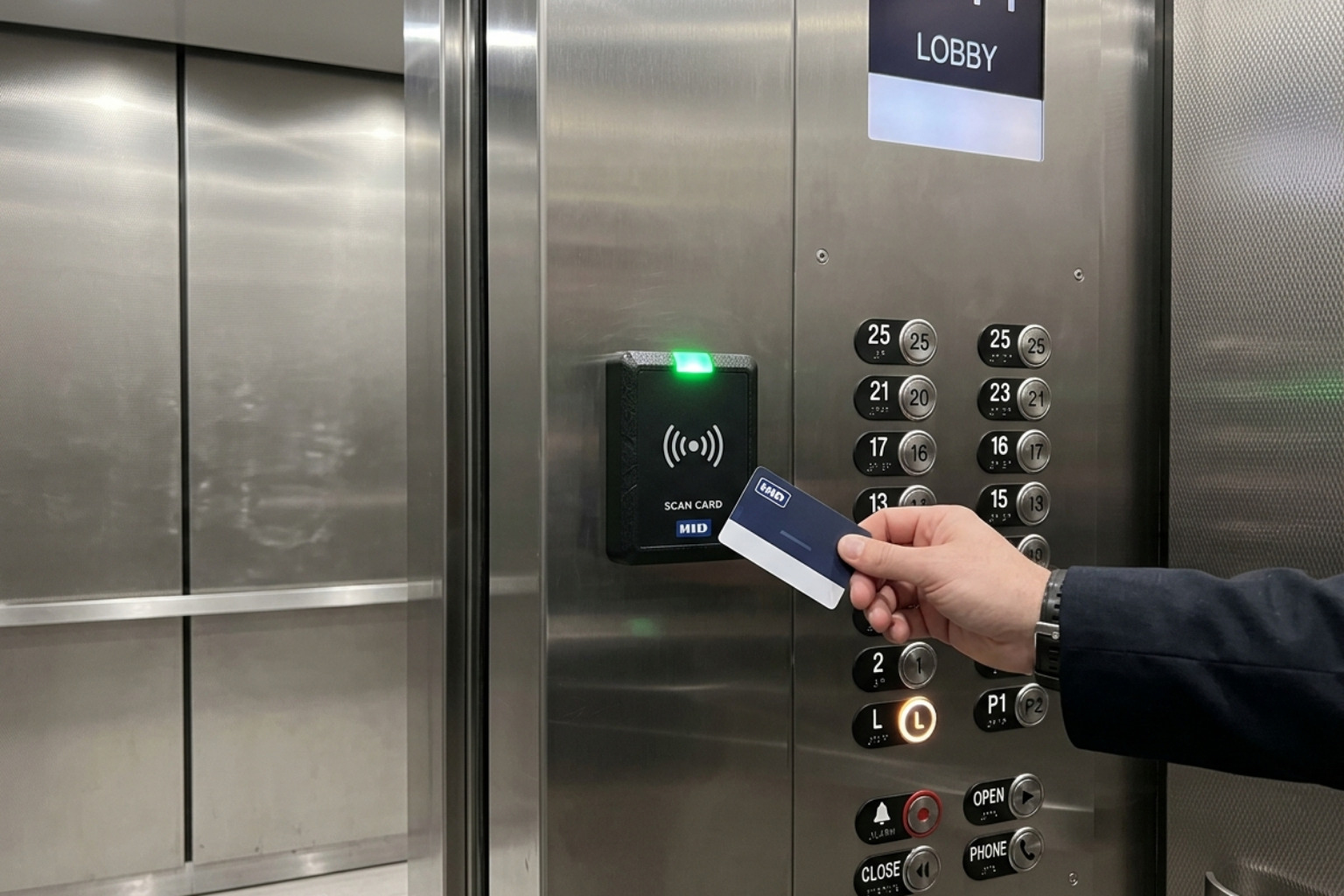
To understand how to master the setup, we first need to look at the “Big Three” components:
- Credential Readers: This is the interface the user interacts with. It could be inside the elevator cab or out in the lobby.
- Elevator Controllers: Usually tucked away in the elevator machine room, these are the “brains.” They store the permissions and decide whether to grant access.
- Management Software: This is where we program the rules—who goes where, and at what time.
Choosing the Right Reader for elevator access control
The “best” reader depends entirely on your building’s culture and security needs. Here is a quick comparison of what we typically install for our Gold Coast clients:
| Credential Type | Pros | Cons | Best For |
|---|---|---|---|
| RFID Cards/Fobs | Cheap, familiar, reliable. | Easy to lose or share. | Large offices, residential. |
| Mobile (Bluetooth/NFC) | Harder to share, very convenient. | Requires a charged phone. | Tech-forward offices, luxury apartments. |
| Biometrics | Cannot be shared or lost. | Higher cost, privacy concerns. | High-security labs, server rooms. |
| PIN Keypads | No physical credential needed. | Codes can be told to others. | Backup access or low-security areas. |
Touchless interfaces have also become a huge hit lately. Using mobile credentials or even gesture-based sensors, users can move through the building without ever touching a germy button. It’s a win for security and hygiene.
Understanding elevator access control Controllers
The controller is where the magic happens. Most professional elevator control panels are designed to handle a certain number of floors—often 8 or 10—but they are easily expandable. For example, some systems can support up to 64 floors by adding extension boards.
- Relay Integration: The controller uses relays to physically connect or disconnect the elevator’s floor buttons. If you haven’t scanned a valid card, the button for the 4th floor simply won’t “click” or register a press.
- PoE Power: Many modern controllers use Power over Ethernet (PoE), which simplifies the wiring significantly.
- Machine Room Installation: While you can install controllers inside the cab, it’s usually a headache for maintenance. We prefer installing them in the elevator machine room where they can be centrally managed and wired into the main elevator control unit.
Planning Your Elevator Access Control Configuration
Before we start pulling wires, we need a plan. Not every elevator is built the same, and neither is every security requirement.
Elevator Types and Their Needs
- Single Elevators: Common in smaller apartment blocks in Burleigh or Currumbin. These are the easiest to secure, often requiring just one reader and one controller.
- Elevator Banks: In high-rise towers, you have multiple lifts working together. Here, the system needs to be synchronized so that if you scan your card at “Lift A,” the permissions carry over if the system assigns you to “Lift B.”
- Smart Elevators & Destination Dispatch: These are the Ferraris of the elevator world. Instead of buttons inside the cab, you select your floor on a touch screen in the lobby. The system then tells you which elevator to enter. This Guide to choosing the right elevator access control for your security system explains how these systems optimize flow while keeping things tight.
Configuration Styles
- Public with Private Floors: The elevator is open to everyone for the lobby and cafeteria, but you need a badge for the office levels.
- Private Selective Access: Only specific people can reach specific floors (e.g., only the CEO can get to the penthouse).
- Zoned Access: Elevators are grouped. Bank A only serves floors 1–10, while Bank B serves 11–20.
Step-by-Step Implementation and System Integration
At Palm Beach Locksmiths, we’ve seen that the most successful setups are the ones that talk to the rest of the building. An elevator access control system shouldn’t live on an island.
1. Hardware Installation
The first step is mounting the readers and wiring the controllers. We typically wire the controller relays in “series” with the elevator’s floor selection buttons. This allows the access control system to act as a gatekeeper for the electrical signal.
2. Software Setup & Time Schedules
Once the hardware is in, we program the rules. One of the most powerful features is time-based scheduling. You might want the elevator to be open to the public during business hours (9 AM – 5 PM) but require a security fob for any “after-hours” access.
3. Integration with Other Systems
To get the best Return on Investment (ROI), we recommend integrating your elevator security with:
- CCTV Integration: If someone tries to use a stolen card, the system can automatically flag the nearest camera to record the event.
- Fire Alarm Failsafes: This is non-negotiable. In the event of a fire, the access control system must release all restrictions so the elevator can return to the ground floor for emergency services.
- Turnstiles: In high-traffic lobbies, scanning at a turnstile can “pre-call” the elevator for you, making the journey seamless.
For more on how we handle these complex setups, visit our Access Control Systems service page.
Mitigating Vulnerabilities and Ensuring Compliance
No system is 100% foolproof, but we can get pretty close by addressing common human and technical “hacks.”
Common Vulnerabilities
- Tailgating (or “Hitchhiking”): This is when an unauthorized person follows an authorized person into the cab. While technology like anti-passback (which prevents a card from being used twice in a row without an exit) helps, the best cure is often a combination of cameras and staff training.
- Card Sharing: “Hey, can I borrow your fob to go to the gym?” It sounds innocent, but it ruins your audit trail. Mobile credentials help mitigate this because people are much less likely to “lend” their personal smartphone to a stranger.
- Social Engineering: Someone holding a heavy box looking “official” often gets people to hold the door or press a floor button for them. Again, cameras and clear signage are your best friends here.
Compliance and Standards
In Australia, we have strict standards for building safety. Any elevator access control installation must adhere to:
- ASME & Australian Standards: Ensuring that alarm buttons and two-way communication always work, regardless of the security state.
- Emergency Egress Protocols: You can never “lock” someone inside a floor in a way that prevents them from escaping during an emergency.
- Fire Service Override: Firefighters have a special key that overrides all electronic security. We recommend monitoring these overrides so that if a “fire key” is used when there isn’t a fire, an alert is sent to security immediately.
Frequently Asked Questions about Elevator Security
How does elevator access control work during a fire?
Safety always trumps security. When a fire alarm is triggered, the access control system is designed to “fail-safe.” This means all floor restrictions are instantly lifted, allowing the elevator to be controlled by emergency services or to return to a designated floor for evacuation. We always integrate with the building’s fire panel to ensure this happens automatically.
Can I add access control to an existing elevator?
Absolutely! This is called “retrofitting.” We can usually install a controller in the machine room and run a small amount of wiring to a reader inside the cab. Even older “legacy” elevators can be brought into the 21st century with the right relay boards and a bit of expert know-how.
What is destination dispatch?
Think of it as an “intelligent” elevator. Instead of getting in and then picking a floor, you pick the floor first at a kiosk in the lobby. The system then groups you with other people going to the same or nearby floors. It reduces wait times, stops the lift from making 20 unnecessary stops, and allows for even tighter security because the lift “knows” exactly where it is going before the doors even open.
Conclusion
Mastering elevator access control isn’t just about high-tech gadgets; it’s about creating a safe, efficient environment for everyone in your building. Whether you are managing a boutique apartment complex in Tugun or a sprawling commercial tower in the heart of the Gold Coast, the right system provides security that moves with your people.
At Palm Beach Locksmiths, we’ve been the Gold Coast’s trusted security experts for over 40 years. We don’t just sell hardware; we provide peace of mind with 24/7 mobile service and professional installations that meet the highest Australian standards.
Ready to secure your “vertical doors”? Give us a call or visit our Access Control Systems page to book a site assessment today. We’ll help you find a solution that offers the best ROI and keeps your building moving upward!