
Is Your Home Actually Protected? What to Know Before Comparing Home Security Systems
Home security systems are one of the most effective ways to protect your property — but with dozens of options available in 2026, choosing the right one takes more than a quick Google search.
When comparing systems, you’ll typically encounter three main categories:
| System Type | Best For | Monitoring | Installation | Contract |
|---|---|---|---|---|
| Professional | Maximum reliability | Professional | Pro only | Often required |
| DIY | Budget + flexibility | Optional | DIY | Usually none |
| Hybrid | Renters + smart home | Professional | Both | Varies |
The stakes are real. According to data from the Australian Institute of Criminology, homes without a security system are significantly more likely to be targeted by intruders. And it’s not just break-ins — car theft and porch piracy are both on the rise, even as residential burglaries trended down in 2024.
The good news? After installing a system, 74% of people report feeling more secure at home.
But “more secure” only matters if you’ve chosen the right system for your property, budget, and lifestyle. A system that’s perfect for a renter in an apartment is very different from what a Gold Coast homeowner needs to protect a multi-entry property or vacation home.
This checklist breaks down exactly what to compare — so you don’t overpay, underprotect, or lock yourself into the wrong contract.
Key Factors for Evaluating Home Security Systems

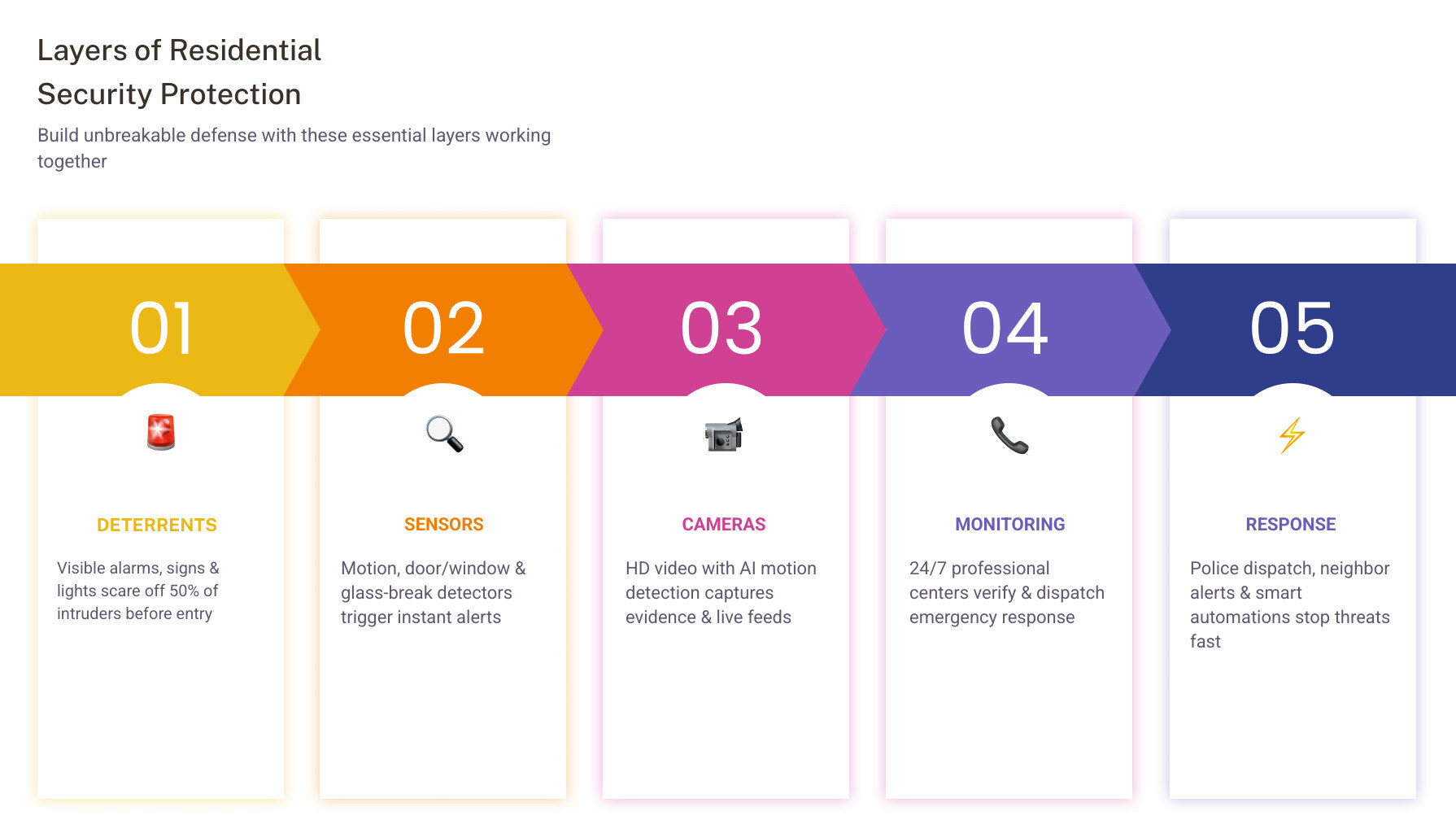
When we evaluate home security systems, we look at three core pillars: equipment quality, monitoring reliability, and total value. In our experience across the Gold Coast and Northern NSW, a system is only as strong as its weakest link. If you have a 4K camera but a slow response time, the footage only helps you watch the crime happen—it doesn’t stop it.
Equipment Quality and Durability
In 2026, the standard for equipment has shifted. We no longer just look for “beeping” alarms; we look for “thinking” systems. High-quality hardware should include:
- Redundancy: Look for “SmashSafe” technology or similar features that ensure the monitoring center is alerted even if an intruder destroys the keypad.
- Connectivity: Systems should offer dual-path communication (Wi-Fi + Cellular backup) so they stay online even if your NBN drops out.
- Weatherproofing: For our coastal clients from Burleigh to Tweed, salt air and humidity can wreak havoc on cheap sensors. Ensure outdoor components are IP-rated for durability.
Professional Monitoring and Response Times
The industry average for a monitoring center to respond to an alert is 45 seconds. However, top-tier systems in 2026 are clocking in at under 35 seconds. When comparing, ask about the number of monitoring centers. Industry leaders maintain multiple centers across the country to ensure that if one goes down due to a natural disaster, another picks up the slack instantly.
Before you commit, there are 5 Things to Know Before Your Electronic Security Installation that can save you a world of headache, especially regarding how these systems interact with your local environment.
Comparing Professional vs. DIY Home Security Systems
The debate between DIY and professional installation has evolved. It used to be a choice between “cheap and basic” or “expensive and complex.” Today, the lines are blurred.
DIY Home Security Systems:
- Pros: Usually no contracts, lower upfront costs, and the ability to take the system with you if you move (great for renters in Miami or Tugun).
- Cons: You are responsible for the placement. If you put a motion sensor in a spot where your cat triggers it every five minutes, you’ll end up turning the system off out of frustration.
Professionally Installed Systems:
- Pros: Expert placement, guaranteed connectivity, and often better integration with complex smart home setups.
- Cons: Higher upfront installation fees and often longer-term contracts.
If you are leaning toward the DIY route, check out our guide on Alarming Simplicity: The Best Easy-to-Install Security Systems to see which brands prioritize user-friendly setups.
Essential Features of Modern Home Security Systems
In 2026, a basic door sensor isn’t enough. Here is what we consider “essential” for a modern home:
- AI Detection: Cameras should be able to distinguish between a person, a pet, a package, and a swaying tree branch. This reduces false alarms significantly.
- Two-Way Audio: This allows you to speak to delivery drivers or warn off intruders.
- Active Deterrence: Look for systems with technology that uses light and sound (like a 105dB siren—as loud as a rock concert!) to scare off burglars before they even reach the door.
- Smart Sensors: Beyond motion, look for glass break sensors, water leak detectors, and temperature sensors (which can alert you to fire risks or failing appliances).
For those looking to beef up their visual surveillance, a professional CCTV Camera Installation remains the gold standard for gathering evidence and providing 24/7 peace of mind.
Understanding the Costs of Protection in 2026
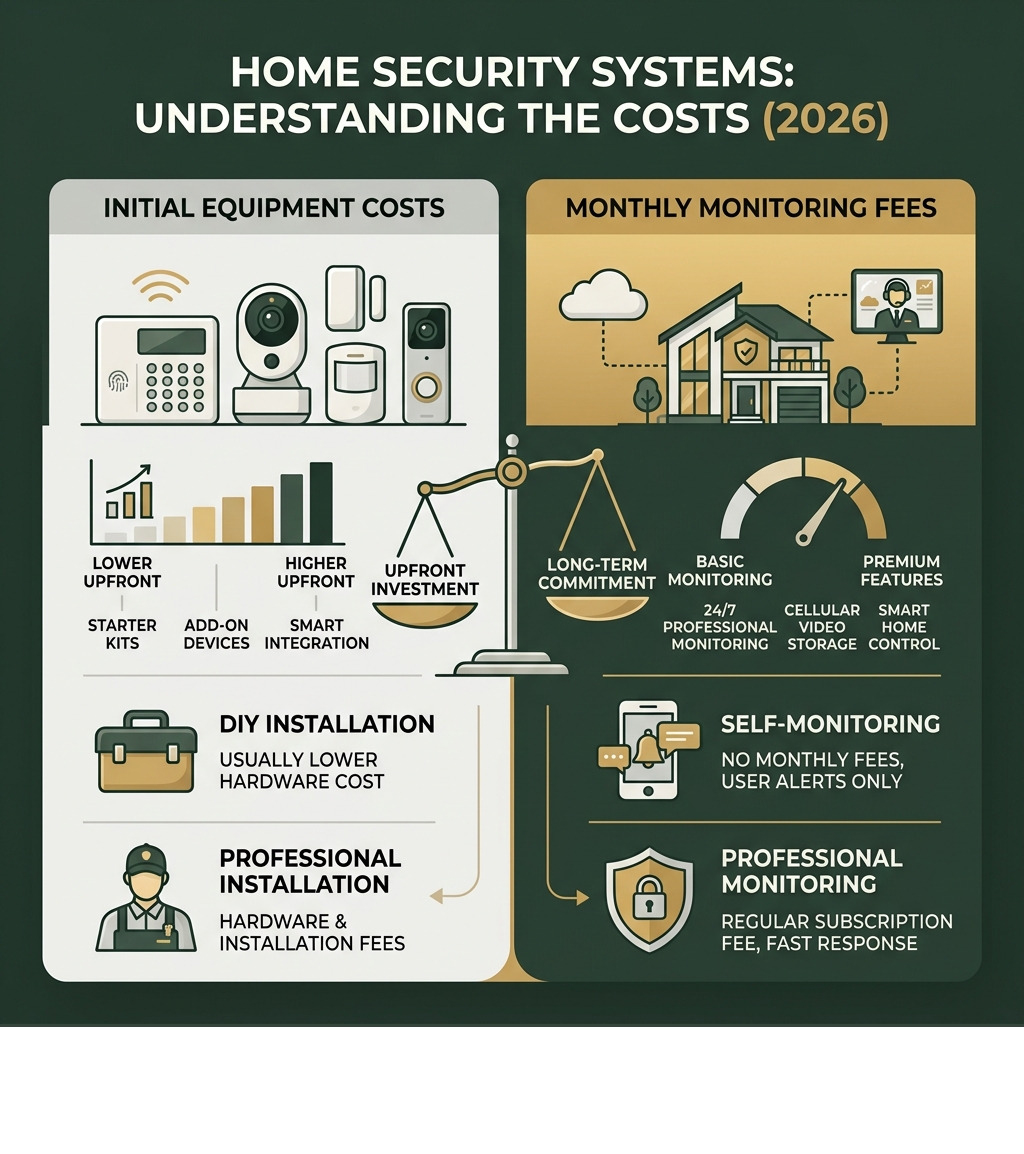
Budgeting for home security systems requires looking at three distinct costs: the hardware, the installation, and the ongoing monitoring fees.
| Cost Component | DIY Range (AUD) | Professional Range (AUD) |
|---|---|---|
| Starter Equipment | $300 – $800 | $600 – $2,500+ |
| Installation Fee | $0 | $150 – $500 |
| Monthly Monitoring | $15 – $40 | $30 – $70 |
Upfront vs. Subscription Models
Many companies now offer 0% financing on equipment, allowing you to pay off a $1,000 system over 36 to 60 months. While this lowers the barrier to entry, it often ties you to a long-term contract. Conversely, “no-contract” DIY systems require you to pay for all hardware upfront.
The Local Value Factor
While national franchises have big marketing budgets, local providers in the Gold Coast and Northern NSW often provide better long-term value. We don’t just see you as a “subscriber number.” Local experts understand the specific crime trends in areas like Currumbin or Elanora and can recommend hardware that actually lasts in our climate.
Monitoring Contracts and Hidden Fees
Always read the fine print regarding activation fees. Some companies charge upwards of $200 just to “turn on” a system you already bought. Also, check for “cellular backup” fees—some providers charge extra to ensure your system works when the internet is out.
While focusing on electronics, don’t forget the physical basics. Regular Security Door Servicing ensures that your “first line of defense” is actually functional. An alarm is great, but a sturdy, well-maintained door is what stops the intruder from getting inside in the first place.
Hardware Longevity and Maintenance
A home security system isn’t a “set and forget” purchase.
- Sensors: Most wireless sensors use lithium batteries that last 3–5 years.
- Cameras: High-resolution cameras are data-heavy; ensure your home network can handle the upload speeds required for 4K streaming.
- Technical Support: If your system glitches at 2 AM, do you have a local number to call, or are you stuck in an international phone queue? Local support is vital for long-term reliability.
Choosing the Right System for Your Specific Needs
For Renters
If you’re renting in Burleigh or Miami, you likely can’t drill holes in the walls. Look for wireless, “peel-and-stick” systems. These allow you to protect your space and take the equipment with you when your lease ends.
For Seniors
Security for seniors should focus on ease of use and medical integration. Look for systems with large, backlit keypads, voice control, and wearable “panic buttons” that can alert both the monitoring center and family members simultaneously.
For Vacation Homes
If you own a property in Northern NSW that sits empty for months, you need more than just burglary protection. You need environmental sensors. A water sensor near the water heater or a temperature sensor can alert you to a burst pipe or a failing A/C unit before it causes thousands of dollars in damage.
Smart Home and Access Control Integration
In 2026, your security system should be the “brain” of your home. This includes:
- Automated Lighting: Making the house look occupied when you’re away.
- Smart Locks: Allowing you to let in a cleaner or tradesperson remotely without sharing a physical key. We highly recommend a professional Smart Lock Installation Gold Coast to ensure the lock is perfectly aligned and secure.
- Comprehensive Control: Managing everything from one app. For larger properties or apartment complexes, advanced Access Control Systems can manage who enters which areas and at what times.
Specialized Security for High-Traffic Entries
With the rise of online shopping, “porch piracy” has become a major concern. Video doorbells with “Package Detection” AI can alert you the moment a box is dropped off and keep a watchful eye until you bring it inside. For those in multi-residential buildings, understanding Mastering Elevator Access Control System Setup is essential for ensuring only residents and authorized guests can reach your floor.
Frequently Asked Questions about Home Security
Do home security systems really prevent break-ins?
Yes. Statistics consistently show that houses without home security systems are 300% more likely to be targeted. Burglars are generally looking for the path of least resistance. Visible cameras, yard signs, and sirens act as a massive psychological deterrent. In fact, many burglars will move on to a different street the moment they spot a high-quality outdoor camera.
Can I use a security system without a monthly subscription?
You can, but there are trade-offs. Most modern systems allow for “self-monitoring,” where alerts are sent to your phone. However, if you are in a meeting, sleeping, or in a dead zone, you might miss the notification. Professional monitoring ensures that a human agent is always ready to call emergency services on your behalf. Without a subscription, you also often lose “cloud storage” for your video footage.
How long does it take for monitoring centers to respond?
While the industry average is 45 seconds, top-tier providers aim for under 35 seconds. Some advanced systems even allow agents to “live talk” through your cameras to warn an intruder that the police are on their way, which often stops a crime in progress before the intruder even gets inside.
Conclusion
Choosing between the many home security systems available in 2026 doesn’t have to be overwhelming. By focusing on your specific needs—whether you’re a renter in Tugun or a homeowner in Northern NSW—and prioritizing fast response times and high-quality equipment, you can create a genuine “safety bubble” around your family.
Technology is only half the battle. Physical security, provided by a trusted Residential Locksmith, ensures that your locks, doors, and windows are up to the task.
Ready to take the next step? Secure your property with professional CCTV Camera Installation and let us help you design a system that gives you the peace of mind you deserve. At Palm Beach Locksmiths, we’ve been protecting the Gold Coast for over 40 years—we know what works, and we’re here to help you stay safe.