
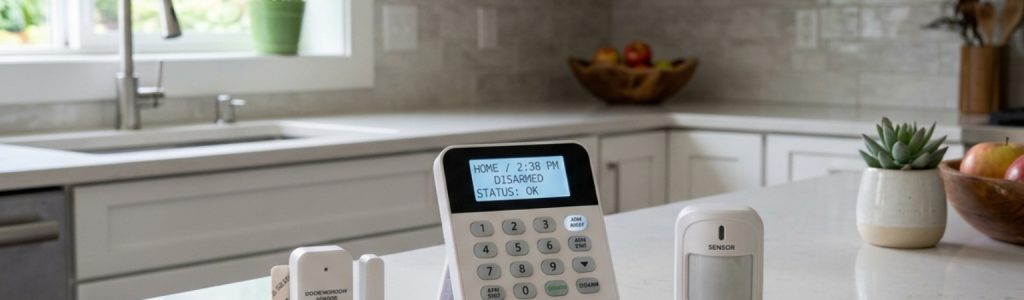
Why a Simple Alarm System Is All Most Homes Really Need
A simple alarm system can be one of the most effective and affordable ways to protect your home, apartment, or business — no complex wiring, no long-term contracts, and no need for a professional installer.
Quick answer — your best options at a glance:
| Type | Best For | Monthly Fee | Key Feature |
|---|---|---|---|
| Standalone door/window alarm | Renters, travelers | None | Installs in minutes, no tools |
| No-contract wireless system (e.g., SimpliSafe) | Homeowners | Optional | App control, expandable sensors |
| DIY circuit (555 timer / Arduino) | Electronics hobbyists | None | Fully customizable |
| Self-monitored panel (e.g., Honeywell Vista) | DIY enthusiasts | None | Hardwired reliability |
| Panic alarm | Personal emergencies | None | Single-button activation |
Whether you rent a Gold Coast apartment, manage a small business, or just want a no-fuss backup layer of security, there is a simple option that fits.
The good news? Even a basic alarm works as a powerful deterrent. When an intruder hears a loud siren — some audible up to 1,000 ft (300 m) away — they don’t wait around to find out whether the police have been called. The psychological impact alone stops many break-ins before they start.
Below, we cover every major type of simple alarm system, from plug-and-play standalone units to beginner-friendly DIY circuits, so you can find the right fit for your situation and budget.
Types of Simple Alarm Systems for Every Home
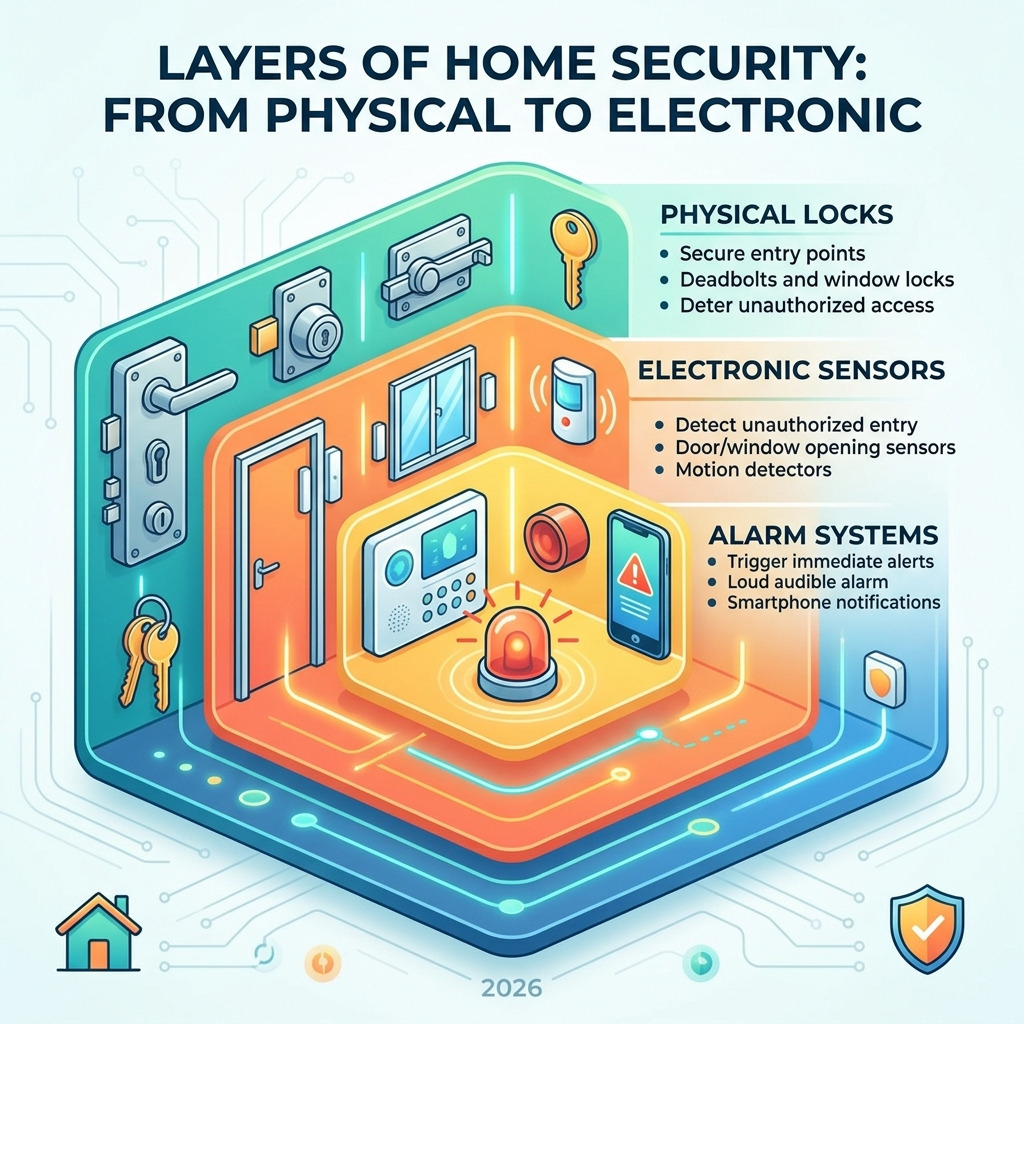
When we talk about a simple alarm system, we aren’t just talking about one specific product. The beauty of modern security is that it scales to your needs. For some of our clients in Currumbin or Burleigh, “simple” means a device they can stick to a window and forget. For others, it means a comprehensive wireless hub that talks to their smartphone.
Standalone Alarms
These are the kings of convenience. Brands like SABRE offer standalone units that require zero wiring. They often use high-decibel sirens—audible up to 300 meters away—to alert you and your neighbors instantly. Because they use self-adhesive pads, they are perfect for renters or students in dorms who can’t drill into walls.
No-Contract Wireless Systems
Systems like SimpliSafe have revolutionized the industry by offering professional-grade hardware without the “old guard” baggage of five-year contracts. These systems use a central base station with a 24-hour battery backup and cellular connection. You can add entry sensors, motion detectors (which are often pet-friendly for animals under 60lbs), and glass break sensors as needed. While they offer professional monitoring for a fee, many users prefer the self-monitoring route via a smartphone app.
Self-Monitored and Community Favorites
If you are building a new home in Northern NSW or the Gold Coast, you might consider a hardwired or hybrid system. Many DIY enthusiasts on platforms like Reddit recommend systems like the Honeywell Vista 20P paired with an Envisalink module. This allows you to receive texts and app alerts without paying a monthly subscription fee.
In fact, some users find that by choosing a system that qualifies for a “monitored” status through DIY providers, they can save up to 15% on their annual insurance premiums. This often covers the cost of the system itself over time!
Deterrent Effectiveness
Never underestimate the power of a visible alarm. Intruders generally look for the path of least resistance. A visible siren or even high-quality signage can be enough to make a thief move on to a “softer” target. Combined with Security Door Servicing, a simple alarm creates a formidable barrier.
For those who need more control over who enters their premises, integrating Access Control Systems or Intercom Installation Brisbane to Ballina can provide that extra layer of verification before a door is even opened.
How to Build a Simple Alarm System DIY Circuit
For the tinkerers and hobbyists among us, building a simple alarm system from scratch is a fantastic way to learn electronics while securing a small space like a shed or a cupboard.
The 555 Timer Circuit
The NE555 timer IC is the Swiss Army knife of electronics. By operating it in “astable mode,” you can generate continuous oscillations that drive a speaker. You can even use a Light Dependent Resistor (LDR) to create a light-sensitive alarm. As light intensity increases (like when a door opens and lets light into a dark room), the LDR’s resistance drops, changing the pitch or volume of the alarm.
Transistor-Based Logic
If you want something more traditional, a transistor-based single-zone alarm is a robust project. Using cheap, off-the-shelf components like BC547 transistors, you can build a circuit that supports normally-open or normally-closed switches. This allows you to use magnetic reed contacts or even foil tape on windows.
Arduino and Ultrasonic Sensors
For a more modern DIY approach, the Arduino Uno or Nano is ideal. By connecting an HC-SR04 ultrasonic sensor, you can create a proximity alarm. The sensor sends out sound waves and measures the time it takes for them to bounce back. If the distance suddenly changes (meaning someone has walked into the room), the Arduino triggers a buzzer.
- Step-by-Step: Simple Arduino Alarm System
DIY Component Comparison Table
| Component | Function | Best Use Case |
|---|---|---|
| LDR (Photoresistor) | Senses changes in light | Interior drawers, safes, or dark sheds |
| Magnetic Reed Switch | Detects when a door/window opens | Main entry points and cabinets |
| PIR Sensor | Detects body heat/motion | Large rooms or hallways |
| Ultrasonic Sensor | Measures distance | Proximity alerts for driveways or porches |
Essential Components for a Simple Alarm System
Whether you are buying a kit or building from scratch, certain components are the “bread and butter” of any simple alarm system.
- Magnetic Reed Switches: These consist of a magnet and a switch. When the magnet moves away (the door opens), the circuit breaks, triggering the alert. They are incredibly reliable and have been a staple of security for decades.
- Piezo Buzzers: These are small, loud, and energy-efficient. A standard 8-ohm speaker or a mini buzzer is usually enough to startle an intruder.
- Power Sources: Most simple setups rely on a 9V battery or a 5-15V DC power supply. For more permanent DIY builds, using a CMOS 4011 NAND gate IC helps manage logic while keeping standby current virtually at zero, which preserves battery life.
- Resistors and Capacitors: A 220-ohm resistor is often used to protect LEDs or buzzers, while capacitors (like a 10µF or 470µF) are used to set the timing for how long the alarm stays on.
- Circuit Reference: Simple Door Alarm Circuit
Installation and Setup of Standalone Alarms
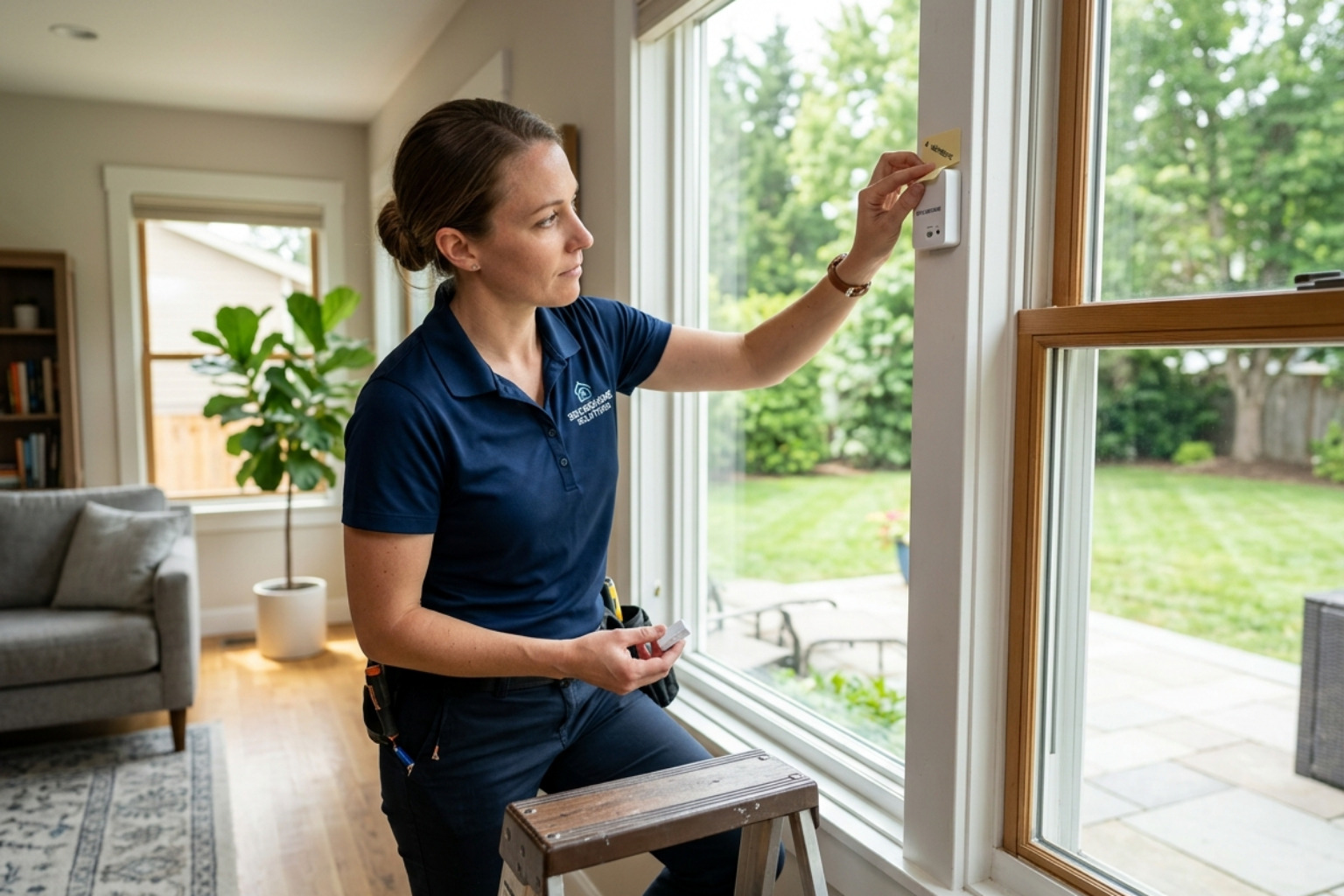
One of the main reasons people search for a simple alarm system is the fear of a messy installation. Fortunately, most modern standalone and wireless systems are “plug-and-play.”
Tool-Free Mounting
Standalone window and door alarms usually come with double-sided adhesive tape. To install:
- Clean the surface: Use rubbing alcohol to ensure the frame is free of dust and grease.
- Align the sensors: The sensor and the magnet must be close (usually within 1cm) when the door is closed.
- Test: Open the door to ensure the siren triggers immediately.
Strategic Placement
For wireless hubs (like the SimpliSafe Base Station), place them in a central location. This ensures they can communicate with sensors at the furthest corners of your home. If you’re in a larger property in Tugan or Miami, check the signal strength at each entry point before permanently mounting sensors.
Portable Security
Because these systems don’t require permanent fixtures, they are the ultimate solution for renters. If you move from an apartment in Elanora to a house in Tweed, you simply peel the sensors off and take them with you. This portability also makes them great for travelers who want to secure a hotel room or a caravan.
If you find that your security needs are growing beyond a simple alarm, you might consider adding CCTV Camera Installation to visually verify what triggered your sensors.
Customizing Your Simple Alarm System Timings
A “dumb” alarm that goes off the second you open your own front door is more of a nuisance than a help. That’s why customization is key.
Entry and Exit Delays
An exit delay gives you time to arm the system and leave the house (usually 30–60 seconds) without triggering the siren. An entry delay gives you a window to reach the keypad and disarm the system when you return. In DIY circuits, these timings are controlled by Resistor-Capacitor (RC) networks. By increasing the values of resistors (like R2) or capacitors (like C2), you can extend these delays.
Siren Cut-Off
You don’t want your alarm screaming for six hours if you aren’t home—your neighbors in Burleigh won’t be happy! Most systems have a timed cut-off, often set to 10 or 15 minutes. In a transistor-based circuit, this is managed by a specific part of the trigger circuit that resets the alarm once the sensor loop is restored.
Panic Alarms
A panic alarm is a single-zone system designed for immediate activation. Unlike a standard alarm, it has no delay. Pressing the button immediately enables the 555 timer in astable mode, creating an instant 1 Hz oscillation (a “warbling” sound) to call for help during health emergencies or intrusions.
- Technical Details: Panic Alarm Circuit
Maintaining and Troubleshooting Your Simple Alarm System
Even the best simple alarm system needs a little TLC to remain reliable.
Battery Testing
Battery-powered alarms are only as good as their power source. We recommend testing your batteries every six months. Most modern wireless systems will send an alert to your phone when a sensor’s battery is low, but standalone “sticky” alarms often just have a small LED indicator. Using a multimeter to check that your 9V or AAA batteries are still holding a full charge is a pro move for any homeowner.
False Alarm Prevention
False alarms are usually caused by:
- Poor Alignment: If a door shifts slightly due to wind, the magnetic sensor might think it’s been opened.
- Dust and Cobwebs: Spiders love building webs over PIR motion sensors, which can trigger the alarm. Keep your sensors clean with a dry microfiber cloth.
- RF Interference: In DIY builds, long wires can act as antennas, picking up stray signals. Adding a small capacitor (like 0.01µF) across the input can “de-tune” these wires and prevent false triggers.
- Construction Details: Simple DIY Intruder Alarm – Construction Details
Connectivity Issues
If your wireless system loses connection to a sensor, try moving the Base Station or adding a range extender. For those with high-security needs, ensuring your system has a cellular backup is vital, as it prevents the system from going offline if your Wi-Fi is jammed or the power is cut.
Frequently Asked Questions about Simple Alarm Systems
Are simple alarm systems effective deterrents?
Absolutely. Most burglars are looking for an easy target. A loud, high-decibel siren (SABRE alarms reach up to 1,000 ft) creates immediate pressure on the intruder. It alerts neighbors and makes it impossible for the thief to work quietly. Research shows that even “fake” alarm signage can have a psychological impact, but a real siren is the ultimate “get out” signal for a criminal.
Can I install a simple alarm system without professional help?
Yes! That is the primary benefit of a simple alarm system. Most modern wireless kits are designed for DIY installation. If you can use a smartphone app and peel the backing off an adhesive strip, you can secure your home in under 30 minutes. No drilling, no wiring, and no expensive technician fees.
What are the limitations of battery-powered alarms?
The main limitation is maintenance. You must remember to change the batteries. Additionally, very cheap standalone alarms lack “professional monitoring,” meaning if you aren’t home to hear the siren, no one is coming to help unless a neighbor calls the police. They are also theoretically more vulnerable to signal jamming than high-end hardwired Access Control Systems, though this is rare for average residential break-ins.
Conclusion
Securing your home shouldn’t be a headache. Whether you choose a standalone “stick-on” sensor for your Gold Coast apartment or a sophisticated no-contract wireless system for your family home in Tweed, the goal is the same: peace of mind. A simple alarm system provides a reliable, cost-effective layer of protection that works 24/7.
At Palm Beach Locksmiths, we’ve spent over 40 years helping our community stay safe. We know that every property is different. While DIY systems are great for many, some situations require a more robust, integrated approach. If you’re unsure which level of security is right for you—or if you want to complement your new alarm with professional CCTV Camera Installation—we are here to help.
From emergency lockouts to advanced electronic security, we provide a “one-stop” shop for your safety. Don’t wait for a “bump in the night” to realize your home needs protection. Start simple, stay safe, and give us a call if you need an expert assessment of your property’s vulnerabilities.