

That Sickening Snap: What to Do When Your Key Breaks in the Lock
Broken key extraction is the process of safely removing a snapped key fragment from inside a lock cylinder — without damaging the lock itself.
Here’s a quick overview of your options:
- Key sticking out? Grip it with needle-nose pliers and wiggle it out gently.
- Key flush with the lock? Use a broken key extractor tool — a thin metal pick that hooks the key’s teeth and pulls it free.
- No tools available? A thin jigsaw blade slid alongside the key can work as a makeshift extractor.
- Nothing working? Stop. Call a professional locksmith before you make it worse.
Never use super glue. It can seep into the lock pins and permanently fuse the cylinder — turning a simple extraction into a full lock replacement.
One moment you’re unlocking your front door, the next you’re holding half a key and staring at a lock that won’t budge. It’s one of the most frustrating things that can happen — especially when you’re in a hurry.
The good news? A broken key does not mean a broken lock. In most cases, the fragment can be removed cleanly, and your lock will work perfectly afterwards.
The bad news? How you handle the next few minutes matters — a lot. The wrong move can push the fragment deeper, damage the internal pins, or make a simple $75 service call into a costly hardware replacement.
This guide walks you through everything: why keys snap, what tools actually work, how to use them safely, and when to put down the DIY kit and call in a professional.
Terms related to Broken key extraction:
Understanding the Mechanics: What is a Key Extractor?
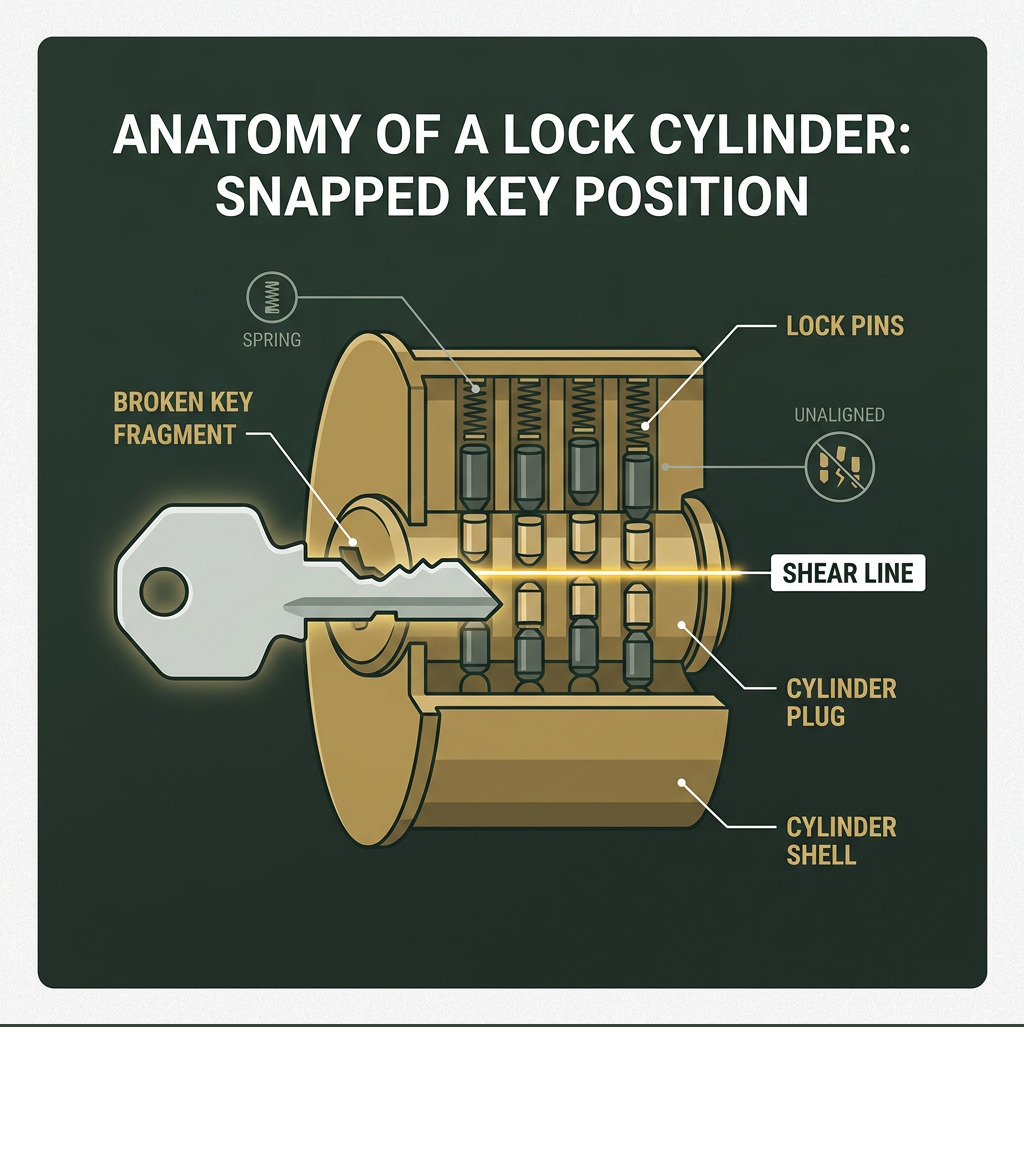
To understand how a broken key extractor works, we first need to look at what is happening inside the lock cylinder itself. Inside a standard pin-tumbler lock, there is a rotating barrel called the lock plug. When a key is inserted, its cut ridges (known as the bitting) align a series of spring-loaded pins along the “shear line.” Once aligned, the plug can rotate, and the door opens.
When a key snaps, the fragment left inside is often held in place by the pressure of these spring-loaded pins. Because the key is cut at different depths, the pins push down into the key’s valleys, effectively locking the fragment in place.
A broken key extractor is a highly specialized, ultra-thin piece of spring steel or titanium designed to bypass this pin pressure. By sliding into the tiny gaps of the keyway, the extractor hooks onto the bitting of the broken key. Once it hooks a tooth, you can pull the tool outward, dragging the broken fragment along with it.
For those looking to explore the foundational concepts of dealing with a stubborn lock on your own, you can read more about DIY key removal tips. These methods focus on achieving friction reduction and maintaining non-destructive entry.
Essential Tools for Broken Key Extraction
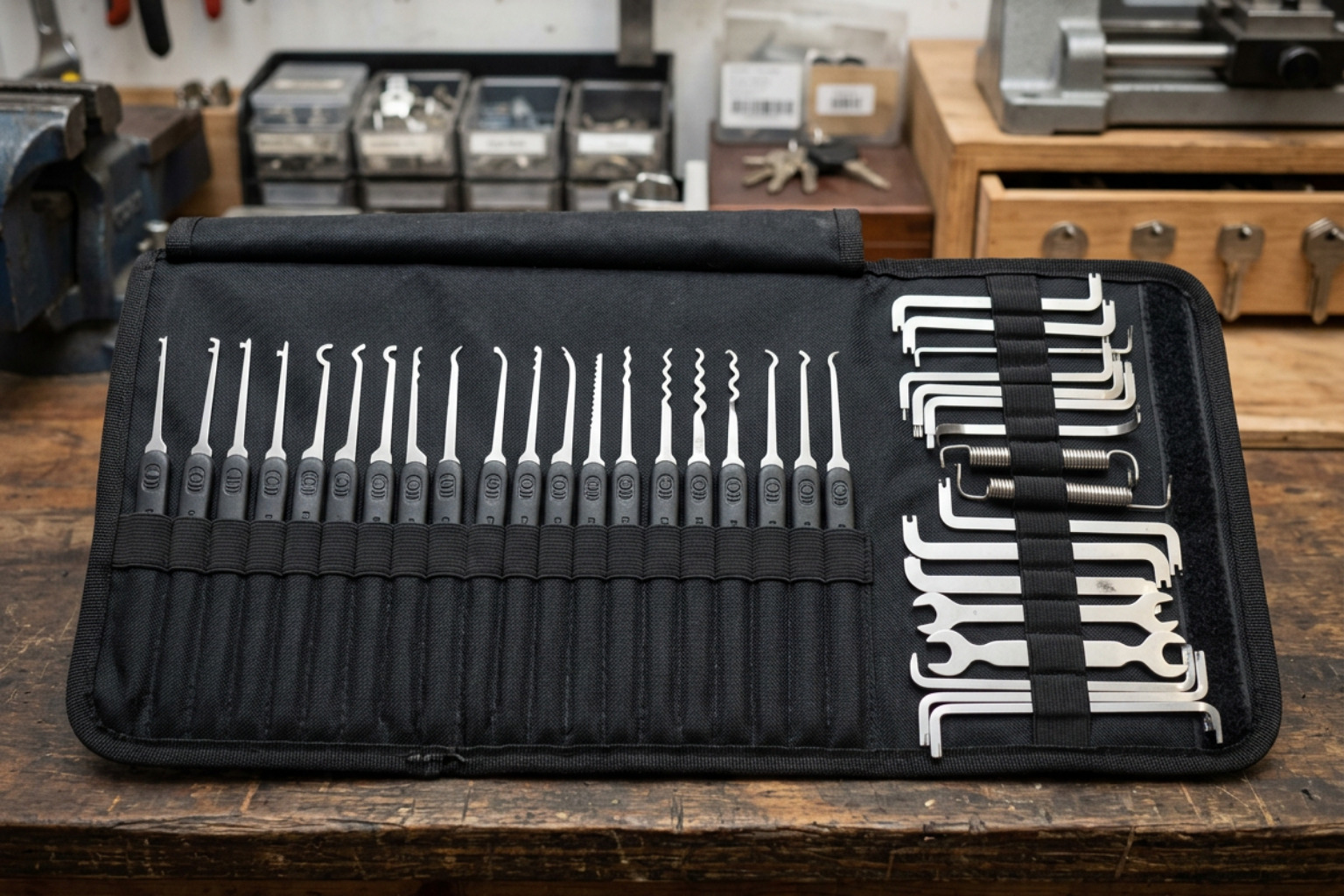
When it comes to specialized tools, locksmiths do not rely on guesswork. There are several distinct types of extractors available on the market, each suited to different keyways and break patterns:
- Hook Extractors: These feature a simple, sharp hook at the tip. They are designed to slide along the top or side of the keyway, hook onto one of the key’s cut depths (the bitting), and pull it forward.
- Spiral Extractors: These are thin, round metal rods with a textured spiral groove (similar to a tiny, flexible drill bit). They are pushed alongside the key and twisted. The spiral grooves grab the brass of the key fragment, allowing you to pull it straight out.
- Saw-Tooth Extractors: Flat and serrated along one or both edges, these act like tiny harpoons. They are exceptionally useful when a clean, straight snap has occurred and you need multiple teeth to bite into the side of the key blade.
- Angler’s Hook Tips: Widely considered the most popular and effective shape for quick extractions, these mimic a small fishhook. They slip easily into tight keyways and grab the broken piece with minimal fuss.
If you are a professional or an enthusiast looking to stock up on the right gear, you can browse high-quality professional broken key tools to see what the pros use.
Interestingly, retail market data from June 2026 shows a massive surge in demand for extraction tools of all kinds. On platforms like Amazon, over 50 units of broken key extractor kits are purchased every single month. This trend isn’t limited to doors; more than 50 units of keyboard switch pullers (which include keycap extractors) and over 200 units of heavy-duty cotter key extractors are sold monthly, highlighting how common it is for things to get stuck!
How to Safely Perform a Broken Key Extraction

Before you touch any tool, you must prepare the lock. Trying to pull a broken key out of a dry, rusty, or stiff lock cylinder is a recipe for a permanent jam.
Your absolute best friend in this scenario is a high-quality lubricant. We highly recommend using a dry silicone lubricant or graphite powder. These options provide excellent friction reduction without attracting dirt or gumming up the internal pins over time.
A critical warning: Avoid WD-40 or standard household oils for lock maintenance. While they might offer a quick fix, they eventually dry into a sticky sludge that traps dust, pollen, and metal shavings, leading to more snapped keys down the road. If your lock has been acting sticky for a while, it might be time to look into reliable lock repairs to fix the root of the problem.
Step-by-Step Guide to Extracting a Flush-Cut Key
If the key has snapped flush with the face of the plug, do not panic. Grab your extractor tool (or a thin jigsaw blade if you are improvising) and follow these steps carefully:
- Check the Lock Alignment: Ensure the lock plug is in its neutral, vertical position. If the key snapped while you were turning it, the pins will not align, and the keyway will remain locked shut. Use a flathead screwdriver to gently turn the plug back to the neutral position.
- Lubricate the Keyway: Puff a small amount of graphite powder or spray dry silicone directly into the keyway above and below the broken fragment.
- Insert the Extractor: Slide your hook or saw-tooth extractor into the top of the keyway, just above the cut side of the key. Keep the tool flat against the side of the keyway to avoid pushing the broken piece deeper.
- Engage the Hook: Once the tool is deep enough to reach past the first or second cut of the key, gently tilt the handle to force the hook or teeth down into the key’s bitting.
- Apply Steady Pulling Pressure: With the hook firmly engaged, pull the tool straight back toward you. Do not jerk or yank it. Maintain slow, steady pressure.
- Grab with Pliers: Once the key fragment slides out far enough to expose a few millimetres of metal, use needle-nose pliers or tweezers to grip it and pull it the rest of the way out.
If you are dealing with a double-glazed patio door or a specialized sliding door lock, the internal mechanism can be slightly more complex. In those cases, read through our guide on double glazed door lock repairs to ensure you do not damage the multi-point locking system.
Common Mistakes to Avoid During Broken Key Extraction
When adrenaline kicks in, it’s easy to make a mistake that ruins your lock. Here are the top blunders we see on the Gold Coast:
- The Super Glue Trap: You might have seen videos online where someone puts a drop of super glue on a matchstick, presses it against the broken key, and pulls it out. Do not do this. In 99% of cases, the glue seeps off the key and runs straight into the lock pins, fusing the cylinder permanently.
- Pushing the Fragment Deeper: Using thick tweezers or a paperclip often pushes the key further into the cylinder, past the shear line, making professional extraction much harder.
- Using Excessive Force: If the extractor tool gets stuck, do not yank it. You risk snapping the tool inside the lock, giving you two broken metal objects to extract instead of one!
If a DIY attempt goes wrong and the lock cylinder is damaged, you will likely need to follow a lock cylinder replacement guide to restore security to your home.
Professional Locksmith Kits vs. DIY Methods
Many homeowners wonder if they should buy a cheap $15 extraction kit online or call in a professional. While DIY kits can work for simple, shallow breaks on loose locks, there is a massive difference in quality and success rates.
Professional-grade extractors are made from premium spring steel or titanium. They are incredibly thin yet strong enough to bend without snapping. DIY kits, on the other hand, are often made of cheap, brittle alloys that snap easily under pressure. Furthermore, professional kits include specialized tools like titanium drill bits, plug spinners, and tension tools designed for high-security locks.
To help you decide whether to tackle this yourself or call us out, here is a comparison of what to expect:
| Feature | DIY Extraction | Professional Locksmith Extraction |
|---|---|---|
| Success Rate | ~25% | 100% (Non-destructive) |
| Risk of Lock Damage | High (fusing pins, scratching keyway) | Zero (completely safe for the lock) |
| Average Time Required | 1 to 2 hours of frustration | Under 15 minutes |
| Tool Quality | Cheap, brittle alloys | Premium spring steel & titanium |
| Ignition Safe? | No (risks damaging electronic transponders) | Yes (fully compatible with modern ignitions) |
No matter where you are in the world, the consensus among security experts is clear. Whether you look at industry advice from Burien WA, residential services in Winter Garden FL, or emergency lock teams in Kansas City, professionals always recommend caution when attempting DIY on high-security locks.
Best Practices to Prevent Keys from Snapping in Locks
The best way to handle a broken key is to make sure it never snaps in the first place! Keys do not break without warning; they undergo “work hardening” and metal fatigue over years of use. Here is how you can protect your keys and locks:
- Inspect Your Keys Regularly: Take a close look at your house and car keys. Do you see tiny hairline cracks near the deepest cuts of the bitting? Is the metal starting to bend or twist? If so, throw the key away and get a fresh duplicate made immediately.
- Lubricate Your Locks Annually: Keep your lock cylinders happy by applying graphite powder or dry silicone spray once or twice a year.
- Fix Door Alignment Issues: If you have to push, pull, or lift your door to get the key to turn, your strike plate is misaligned. This puts immense rotational stress on the key blade, which will eventually cause it to snap.
- Never Force a Key: If a key does not turn with gentle pressure from two fingers, stop turning. The lock is jammed, frozen, or dirty. Forcing it will only leave you with half a key in your hand.
For vehicle owners, maintaining your car lock is just as vital. Take a look at our car lock specialist guide to learn how to keep your automotive locks in peak condition.
Frequently Asked Questions about Key Extraction
Dealing with a snapped key can raise a lot of questions. Here are some quick answers to help you preserve your lock and get back inside safely.
Can a locksmith remove a broken key without replacing the lock?
Yes, absolutely! In almost every single case, a professional locksmith can perform a clean, non-destructive extraction that preserves the lock cylinder. Once the fragment is removed, the lock will work perfectly with your spare keys. If you don’t have a spare, a locksmith can actually decode the broken pieces and cut a brand-new key on the spot. To see how we can assist you with this, explore our full range of locksmith services.
Why shouldn’t I use the super glue method to extract a key?
While it looks tempting in online videos, the super glue method is incredibly risky. Lock cylinders are built with incredibly tight tolerances—measured in thousandths of an inch. When you push a glue-covered wire or matchstick into the keyway, the glue will almost certainly smear onto the internal pins and the plug walls. Once it cures, the pins fuse together, making it impossible to rotate the lock or extract the key. This turns a simple extraction service into an expensive, mandatory lock replacement.
What should I do if a key breaks inside my car ignition?
If your key snaps inside your car ignition, do not attempt a DIY extraction. Modern car ignitions are packed with fragile electronic transponder sensors, steering column locks, and delicate wafer systems. Inserting paperclips, glue, or cheap tools can easily ruin these sensors, resulting in a massive repair bill from a dealership. Instead, call a mobile automotive locksmith who has the specialized tools to extract the key safely without disturbing the electronics. For specialized automotive tips, check out our insights on Seattle automotive extraction and Miami key extraction services to see how pros handle these complex situations.
Conclusion
A broken key is a major inconvenience, but it doesn’t have to ruin your day or your budget. By staying calm, avoiding the dreaded super glue trap, and using the right tools, you can resolve the issue quickly and safely.
If you’re on the Gold Coast or in Northern NSW and find yourself staring at a snapped key, let the experts handle it. At Palm Beach Locksmiths, we have over 40 years of experience serving our local community. From Currumbin and Burleigh to Tweed and Miami, our 24/7 mobile locksmiths are always ready to provide fast, reliable, and non-destructive entry at competitive prices.
Save yourself the headache and get back to your day. Reach out to the team at Palm Beach Locksmiths in Currumbin or call us directly to get your broken key extracted in minutes!