
When Your Double Glazed Door Won’t Lock: What You Need to Know
Double glazed door lock repairs are often simpler than you think — and in many cases, you can fix the problem yourself before calling a professional.
Quick answers based on your situation:
| Symptom | Most Likely Cause | First Step |
|---|---|---|
| Lock works open but not closed | Door misalignment or sagging hinges | Adjust hinges or keeps |
| Handle feels loose or wobbly | Worn gearbox or loose screws | Tighten barrel screws |
| Key turns but nothing moves | Internal gearbox failure | Call a locksmith |
| Lock is stiff or hard to turn | Dirt buildup or lack of lubrication | Clean and lubricate with silicone or graphite |
| Key snapped in the lock | Worn cylinder or misalignment | Extract carefully or call a locksmith |
Double glazed doors are everywhere on the Gold Coast — and for good reason. They keep homes energy-efficient, secure, and comfortable. But the locks and handles on these doors take a beating from daily use, humidity, and the kind of heat that makes uPVC expand and contract with the seasons.
The frustrating part? Most lock failures don’t happen overnight. They creep up slowly — a slightly stiff handle here, a key that needs a little extra force there. Then one day the door just won’t lock.
The good news is that most issues have a straightforward fix. Whether it’s cleaning out debris, tightening a screw, or adjusting a hinge, a lot of double glazed door lock problems can be solved without spending a cent on a tradesperson.
This guide walks you through everything — from diagnosing the problem to knowing when it’s time to call in an expert.
Why Locks Fail and How Weather Affects Them
If you live in Burleigh or Miami, you know the Gold Coast sun is no joke. For uPVC and sliding glass doors, temperature is a major factor. These materials are designed to be durable, but they aren’t immune to the laws of physics.
Thermal Expansion and Seasonal Contraction
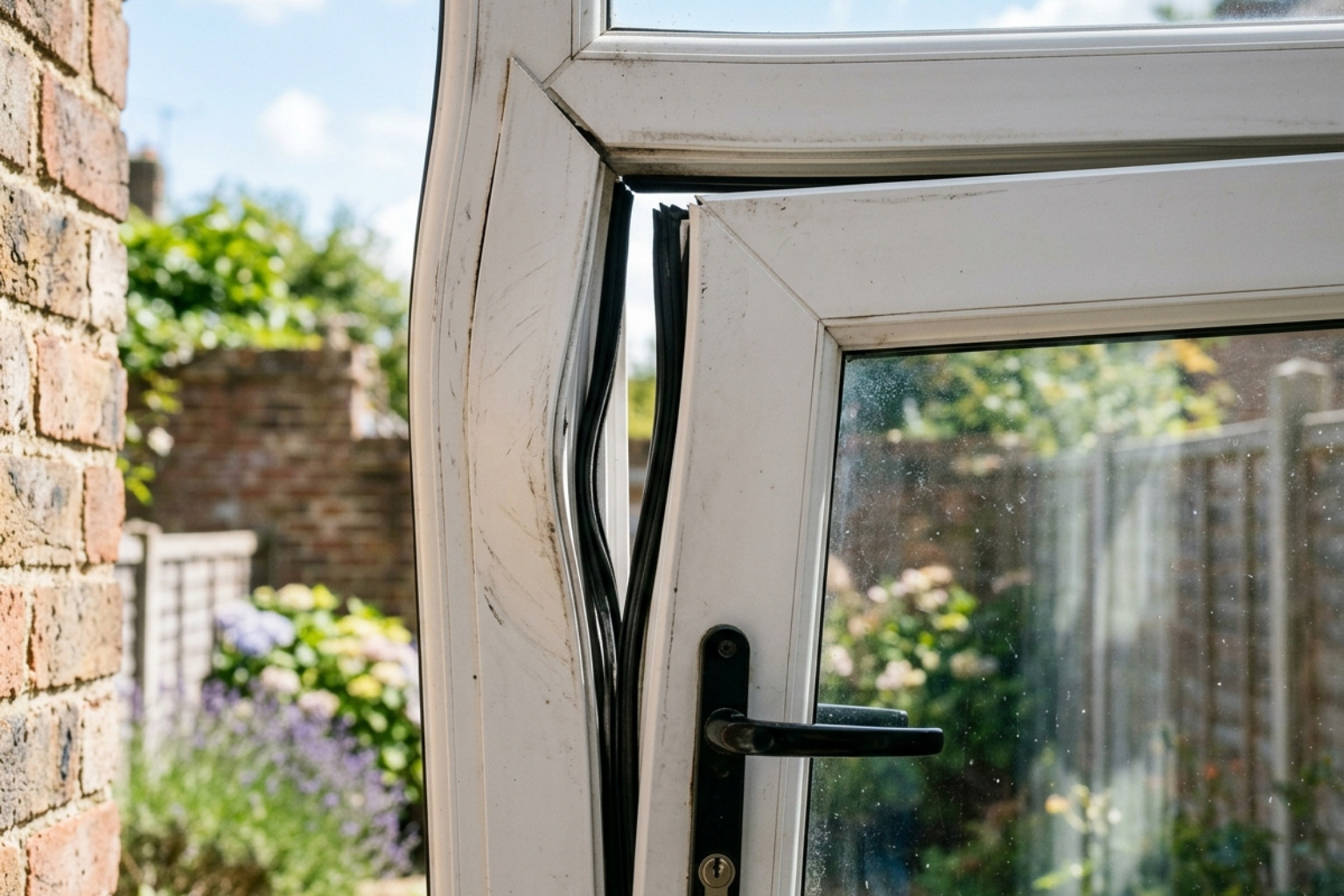
In the heat of a Queensland summer, uPVC frames can expand significantly. This expansion often causes the door to press tightly against the frame, making the locking points (hooks and rollers) struggle to find their designated “keeps” or slots. Conversely, cold winter nights can cause the material to contract, creating gaps or shifting the alignment just enough that the lock won’t engage. This seasonal “breathing” is a primary reason why you might need double glazed door lock repairs even if the hardware itself is high quality.
The 7-8 Year Gearbox Limit
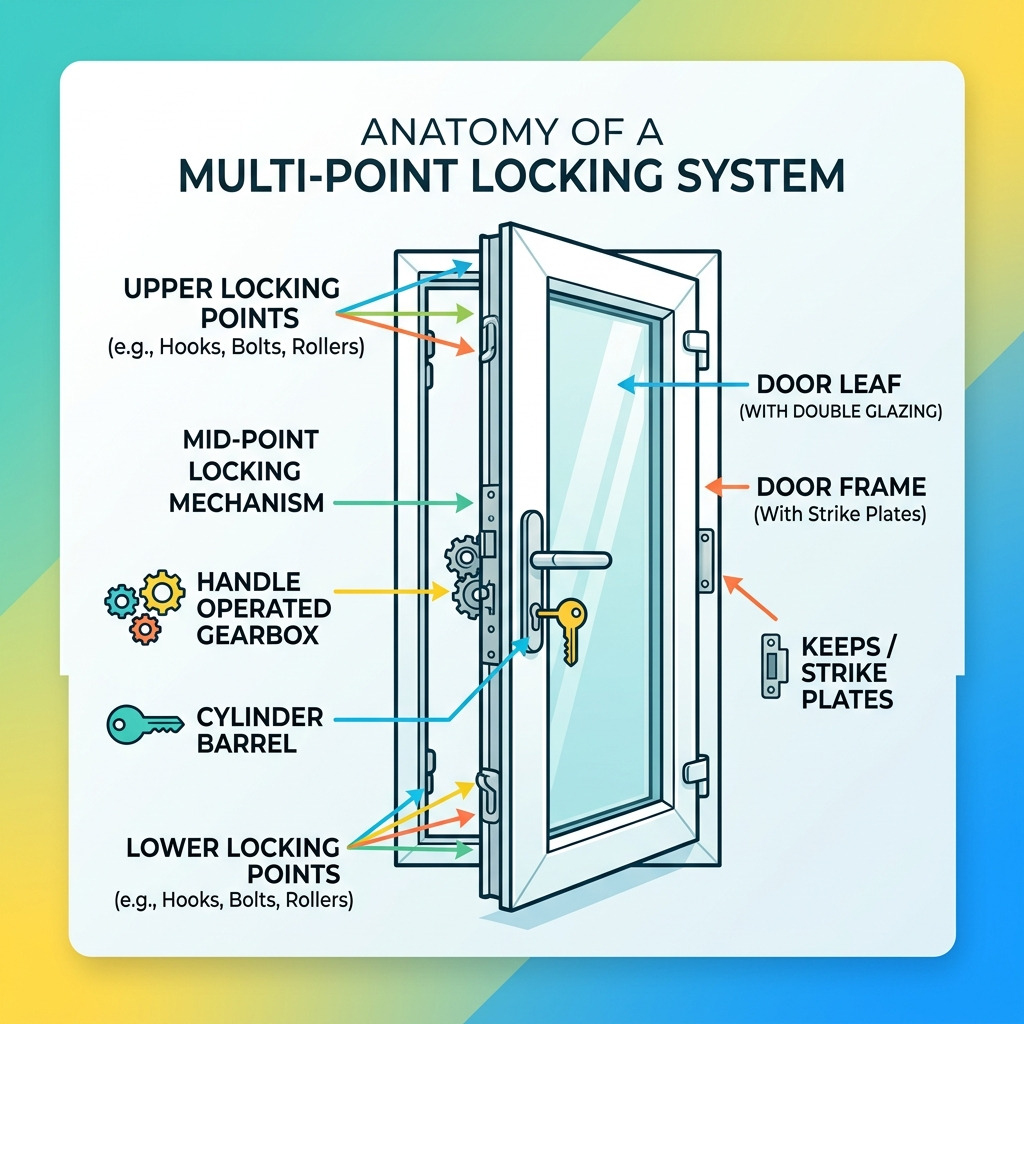
Inside your door is a complex piece of engineering called a multi-point gearbox. Research shows that these internal components—the springs, cams, and levers—typically have a lifespan of about 7 to 8 years. If your door is over 20 years old, it’s likely running on borrowed time. Over thousands of cycles, the metal fatigue sets in, and eventually, a spring snaps or a cam shears off.
Dirt, Debris, and Salt Air
Living near the coast in places like Currumbin or Tugun means salt is always in the air. Salt air is highly corrosive to metal hardware. Furthermore, sliding door tracks are magnets for pet hair, sand, and dust. When this debris gets into the locking mechanism, it mixes with old grease to create a thick, abrasive paste that grinds down the moving parts. According to The Ultimate Guide To Double Glazing Door Lock Repairs, simply cleaning these components can often solve “broken” lock issues.
Diagnosing Your Double Glazed Door Lock Repairs
Before you reach for the heavy tools, we need to play detective. Diagnosing the issue correctly saves you from buying parts you don’t need.
The “Open Door” Test
This is the single most important diagnostic step. Open the door and try to engage the lock (usually by lifting the handle and turning the key).
- If it locks perfectly while open: The problem is alignment. The door has sagged or the frame has shifted, and the locking points aren’t hitting the holes in the frame.
- If it won’t lock while open: The problem is mechanical. Either the handle, the cylinder (where the key goes), or the internal gearbox is broken.
Identifying the Symptoms
- Clicking Sounds: Usually indicates a broken gear inside the gearbox.
- Handle Drops or Floats: This often means the return spring in the handle or the gearbox has snapped.
- Key Won’t Turn Fully: Could be a blocked “keep” on the frame or a faulty Euro-cylinder.
- Frame Rub Marks: Look for shiny metal or scuffing on the strike plates. This tells you exactly where the door is sagging and which hinge needs adjustment.
If you find that the cylinder itself is the issue, you might want to look into residential locksmith services to ensure your home remains secure with a high-quality replacement.
Essential Tools and Maintenance Best Practices
To perform basic double glazed door lock repairs, you don’t need a workshop full of gear. Most jobs require just a few household items.
The DIY Tool Kit
- Screwdriver Set: Both Phillips and flat-head.
- Allen Keys: Essential for adjusting uPVC hinges.
- Needle-nose Pliers: Great for extracting snapped keys or debris.
- The “Matchstick Trick”: If a screw hole in the uPVC or wood is stripped, insert a matchstick or toothpick with a dab of glue to give the screw something to grip.
Lubrication: The Golden Rule
NEVER use WD-40 in a door lock. While it seems like a quick fix, WD-40 is a solvent, not a long-term lubricant. It attracts dust and eventually turns into a sticky “gunk” that ruins the mechanism.
- Use Silicone-based Lubricant: Ideal for tracks and rollers.
- Use Graphite Powder: The best choice for the keyhole/cylinder as it stays dry and won’t attract dirt.
- Use PTFE Spray: Excellent for the multi-point hooks and bolts.
According to Solutions To Issues With Double Glazing Lock Repairs, regular cleaning of the tracks and biannual lubrication can extend the life of your door hardware by years.
Step-by-Step Guide to Common Repairs
Let’s get into the nitty-gritty of fixing those frustrating door issues.
Identifying Your Hardware
Before buying parts, check the “glass etching” in the corner of your window or the side panels of the door. While the glass maker isn’t always the door maker, it often gives us a clue. Look for brand names like Whitco, Hoppe, or Mila on the metal strip (faceplate) of the lock.
Step-by-Step: DIY Double Glazed Door Lock Repairs for Handles
If your handle is loose or “floppy,” follow these steps:
- Remove the Screws: Usually located on the internal handle backplate.
- Pull the Handles Apart: The internal and external handles are connected by a square metal bar called a spindle.
- Inspect the Spindle: If it’s twisted or worn, replace it. If it’s just dirty, wipe it down.
- Check the Springs: Many handles have “spring cassettes” inside. If the handle doesn’t return to a horizontal position, these cassettes might need replacing.
- Reassemble and Tighten: Ensure the spindle is centered and tighten the screws firmly (but don’t over-tighten, or you might crush the uPVC frame).
Professional Double Glazed Door Lock Repairs for Gearboxes
The gearbox is the “brain” of the door. It sits inside the door leaf and moves all the hooks and bolts.
- When to DIY: If you are comfortable removing the entire long metal strip from the edge of the door, you can often unscrew the gearbox and swap it for an identical model.
- When to Avoid DIY: If the door is jammed shut and won’t open, do not force it. You risk snapping the internal mechanism in a way that makes it impossible to open without damaging the door frame. This is when you should call for commercial locksmith services or residential experts who have the tools to bypass the lock non-destructively.
Professional Help and Preventive Maintenance
Sometimes, the best DIY move is knowing when to stop. If you’re dealing with a snapped key, a jammed “triple lock” system, or a door that has sagged so much it’s scraping the floor, professional help is the safest route.
Toe and Heel Realignment
This is a specialized technique used by professionals to “square up” a uPVC door. It involves removing the glass beads, shifting the glass unit slightly, and using plastic packers to brace the door diagonally. It’s the only way to fix a door that has physically “dropped” over time.
Security Upgrades
While performing double glazed door lock repairs, consider upgrading to Anti-Snap Euro-cylinders. Standard cylinders are vulnerable to a technique called “lock snapping.” An anti-snap cylinder is designed to break in a specific way that keeps the central locking cam secure, even if the front of the lock is pulled off.
Maintenance Schedule
- Monthly: Vacuum the door tracks. Dirt is the #1 killer of sliding door rollers.
- Every 6 Months: Lubricate the moving parts of the multi-point lock and the cylinder.
- Annually: Check the tightness of all handle and hinge screws.
For those in the Gold Coast area, locksmith services Gold Coast can provide a full security audit and maintenance check to prevent emergency lockouts.
Frequently Asked Questions about Door Repairs
Why does my door lock when open but not when closed?
This is almost always a misalignment issue. As houses settle or uPVC expands in the heat, the hooks on the door no longer line up with the slots (keeps) on the frame. Try adjusting the hinges with an Allen key to lift the door slightly. You can also move the “keeps” on the frame up or down by loosening their screws.
What are common mistakes to avoid during DIY repairs?
- Using the wrong lubricant: As mentioned, stay away from WD-40 or heavy grease.
- Forcing the key: If the key won’t turn, forcing it will only snap the key or the internal gearbox.
- Buying “Universal” parts: There is no such thing as a truly universal uPVC lock. Always measure the “backset” (distance from the keyhole to the edge of the door) and the “PZ centers” (distance between the center of the handle and the center of the keyhole).
- Over-tightening: uPVC is hollow. If you tighten screws too hard, you can deform the frame.
How do I identify the correct replacement parts for my door?
Look at the metal strip on the edge of your door. There is usually a manufacturer’s logo stamped there. Measure the length of the metal strip, the number of locking points (hooks, rollers, bolts), and the spindle size. Taking the old part to a specialist locksmith shop is the best way to ensure a 100% match.
Conclusion
A malfunctioning door doesn’t just ruin your day; it compromises your home’s security. Whether it’s the salt air of the Gold Coast corroding your hinges or the summer heat warping your frames, double glazed door lock repairs are a necessary part of home maintenance.
At Palm Beach Locksmiths, we’ve seen it all. With over 40 years of experience serving the Gold Coast, Tweed, and Northern NSW regions, we specialize in everything from simple handle replacements to complex multi-point gearbox repairs. We are a 24/7 mobile service, meaning we come to you in Burleigh, Elanora, or anywhere in between, ensuring your home is “Stuck No More.”
Don’t let a sticking lock become a security risk. Contact our Gold Coast locksmith team for expert repairs today and get your doors back in perfect working order!