

That Sinking Feeling at Your Locker: Why Opening a Combination Lock Trips So Many People Up
Knowing how do you open combination locks is one of those skills that sounds simple — until you’re standing in front of your locker on the first day of school and your mind goes completely blank.
You’re not alone. Even people who’ve used the same lock for years sometimes fumble the sequence and wonder if the lock is broken. Spoiler: it usually isn’t.
Here’s the quick answer:
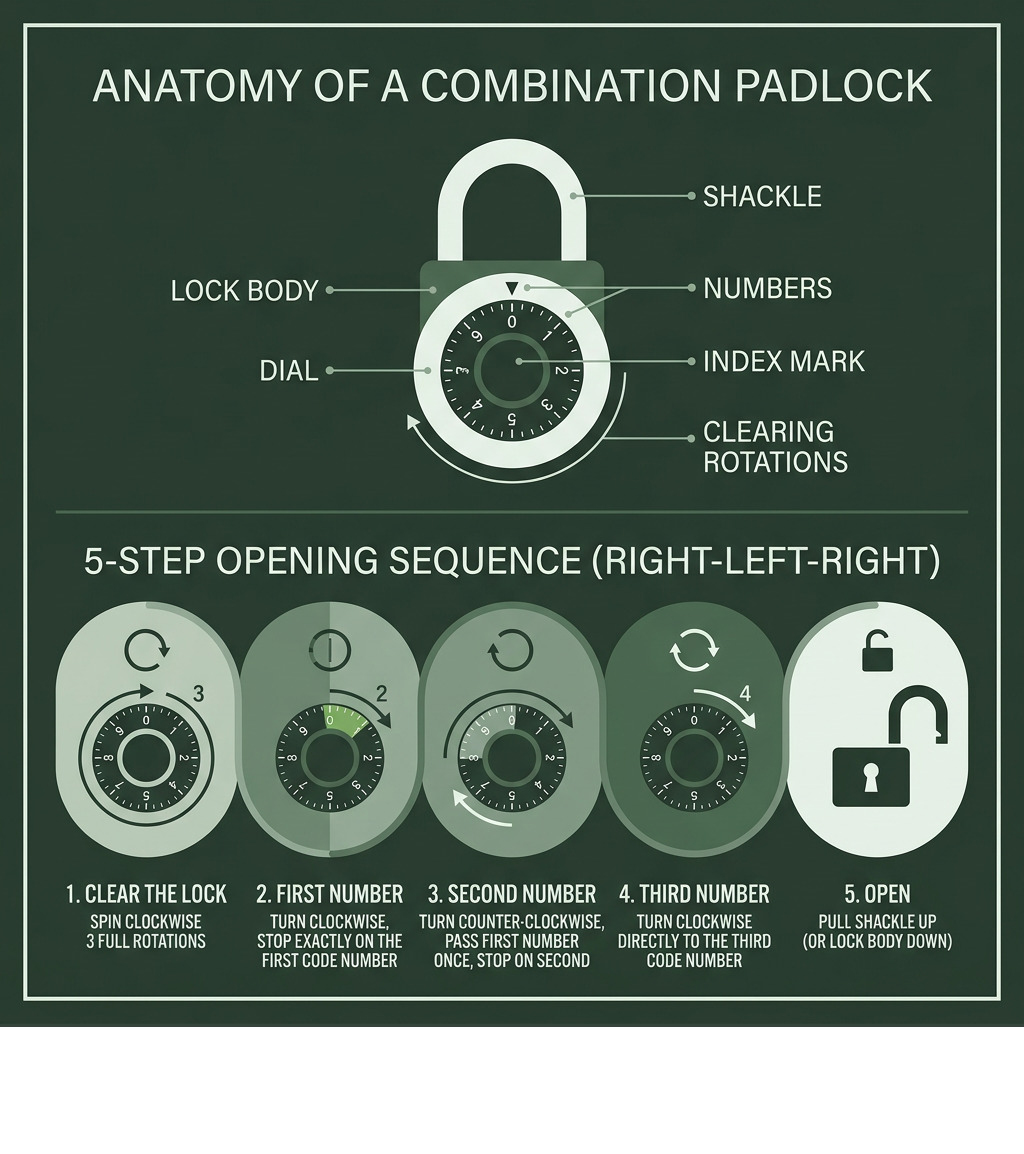
How to open a standard 3-number combination lock:
- Clear the lock — Spin the dial clockwise 3 full rotations
- First number — Turn clockwise and stop exactly on the first number
- Second number — Turn counterclockwise, pass the first number once, and stop on the second number
- Third number — Turn clockwise directly to the third number
- Open — Pull the shackle up or pull the lock body down
That’s the core sequence. But over 80% of combination lock failures come down to user error — things like miscounting rotations, overshooting a number by one tick, or rushing through the steps. A single digit off can stop the lock from opening entirely.
This guide walks through every step in plain language, covers the differences between padlocks and safe dials, and explains what to do when the correct code simply won’t work.
Related content about how do you open combination locks:
How Do You Open Combination Locks? A Step-by-Step Guide

At first glance, a combination lock looks like a simple metal puck with a spinning face. But inside, it is a beautifully engineered puzzle of wheels, notches, and pins. When you spin the dial, you are manually aligning internal discs so that a locking bar can drop into place, releasing the shackle.
If you are struggling with the classic “right-left-right” dance, don’t worry. We have broken down the exact steps to help you master this basic life skill. For official guidance directly from the industry standard, you can also check out this official How to use a combination lock – Step by Step Instructions sheet.
Clearing the Dial and Starting the Sequence
Before you even think about entering your first number, you must clear the lock. This is the most frequently skipped step, and it is the reason many attempts fail before they even begin.
Inside the lock, the internal wheels may still be partially aligned from your last opening attempt or from bumping around in a school bag. To clear these internal tumblers and reset the mechanism to zero:
- Spin the dial clockwise (to the right) at least three full rotations.
- Do not worry about where you stop during these initial clearing spins; just let the dial glide.
- Once you have cleared it, stop exactly on the first number of your combination.
By completing these three full turns, you ensure all internal drive pins have engaged their respective wheels, setting a clean slate for your code.
The Right-Left-Right Dialing Method
Now that your lock is cleared and resting on your first number, it is time to input the rest of the sequence. This is where precision matters. To get a detailed look at locker-specific locking systems, you can refer to this guide on How to Open a Locker Lock | Art of Lock Picking.
Follow this exact sequence:
- Step 1 (First Number): You should already be resting on your first number from your clearing spins. If you overshot it, do not just turn it back! You must clear the lock and start over.
- Step 2 (Second Number): Turn the dial counterclockwise (to the left). You must pass your first number exactly once. Keep turning left until you land directly on your second number.
- Step 3 (Third Number): Turn the dial clockwise (to the right) directly to your third number. Do not do any extra spins or passes this time. Stop exactly on the number.
- Step 4 (The Release): Pull up firmly on the shackle (the metal U-shaped loop) or pull the body of the lock downward. If your locker has a built-in dial, this is the moment you lift the locker door handle.
Once you are done, always remember to secure the lock by pushing the shackle back into the body and spinning the dial a few times to scramble the internal wheels!
Padlocks vs. Safes: Key Differences in Dial Mechanisms
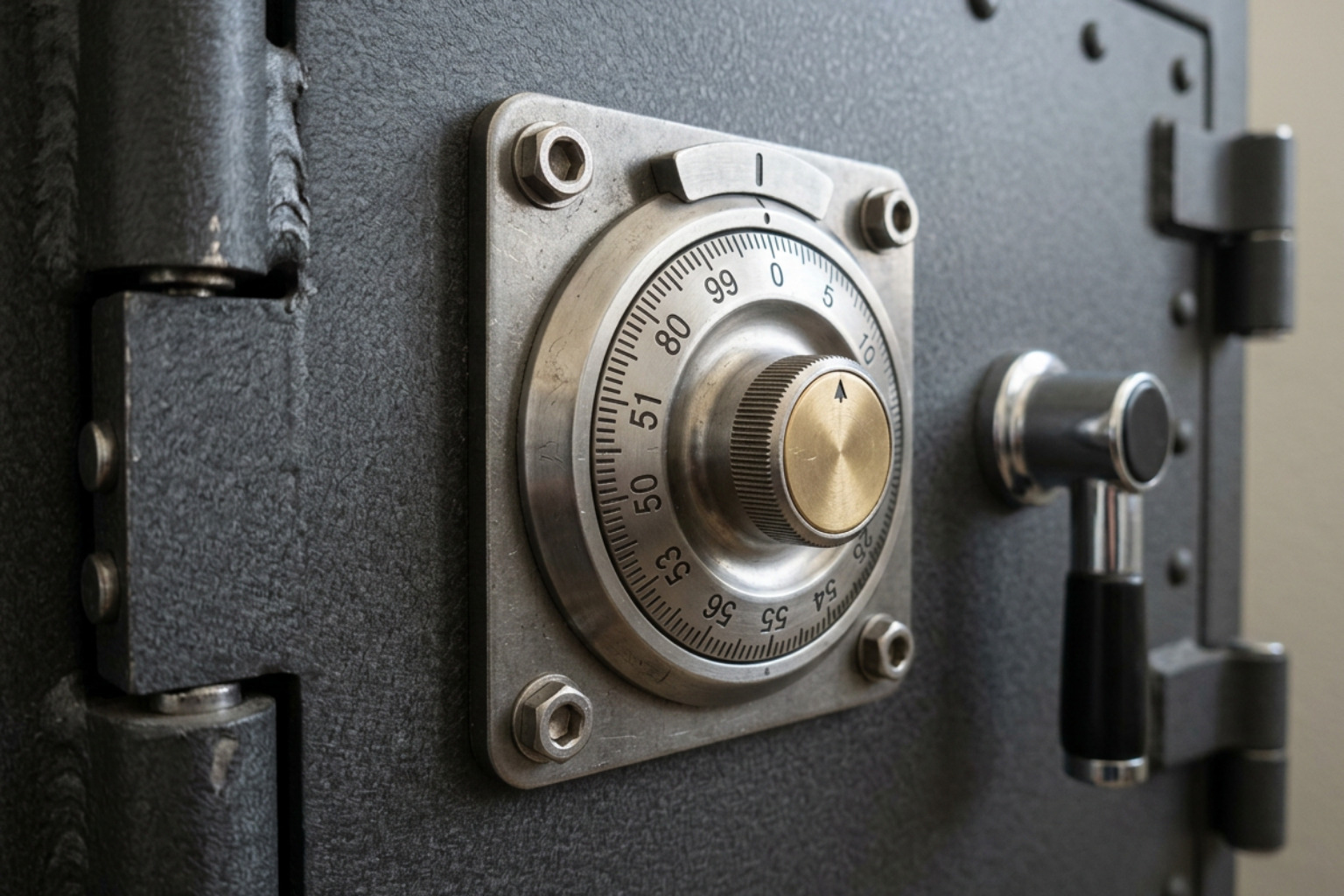
While a padlock and a commercial safe look like they use the same spinning dial, their internal mechanisms are worlds apart. Standard padlocks are built for convenience and basic security, meaning they have wider “gates” inside. This means if your code is 20-10-30, the lock might still open if you land on 19-10-31.
A heavy-duty safe or gun safe, however, is a high-precision instrument. Safe locks use a spindle, drive pin, and a highly secure wheel pack designed to tolerate zero errors. If you are off by even half a tick on a safe dial, it will not budge. Furthermore, safes do not automatically pop open when the final number is reached; they require a physical action to retract heavy steel bolts.
Mechanical Dial Safes vs. Standard Padlocks
On a standard padlock, the shackle is spring-loaded. When the three internal wheels align, the locking pawls snap open.
On a mechanical safe lock, dialing the combination merely aligns the wheels so that a bar called the “fence” can drop into the wheel gates. Once the fence drops, you must manually turn a handle or lever to retract the bolts.
To help illustrate these differences, we have put together this comparison table:
| Feature | Standard Combination Padlock | Mechanical Dial Safe / Gun Safe |
|---|---|---|
| Primary Sequence | Right (3 turns) – Left (1 pass) – Right | Left (4 turns) – Right (3 turns) – Left (2 turns) – Right (to stop) |
| Tolerance | Generous (often 1-2 ticks of leeway) | Zero tolerance (must be exact) |
| Opening Style | Spring-loaded shackle pops open | Must turn an external handle or lever |
| Internal Mechanism | Basic wheel pack and latch | Heavy spindle, drive pin, and sliding bolt |
| Resetting Code | Often impossible or requires a special key | Requires a professional change key |
Because of these deeper internal mechanisms, safe dials require a much slower, more deliberate touch. If you are dealing with a larger dial lock, you can find further operational insights in this comprehensive How To Open A Combination Lock: Guide For Dial & Number … resource.
Common Mistakes and Troubleshooting Stuck Dials
Did you know that over 80% of combination lock failures are caused by simple user error? It is true! Before you assume your lock is broken and start looking for bolt cutters, let’s look at the most common culprits:
- Dial Drift: Over time, the dial face can shift slightly on its spindle, or the internal wheels can wear down. This means your lock might actually open on a number that is one or two ticks off from your written combination.
- Overshooting: When you are in a rush between classes or trying to grab your gym gear, it is easy to spin too fast. If you pass your target number by even a millimeter, the internal alignment is ruined.
- Miscounting Passes: On the second number, many users forget to make that one full pass to the left before stopping.
Troubleshooting: Why Your Correct Code Won’t Open Combination Locks
If you are absolutely certain you are entering the correct code and using the right sequence, the lock itself might be experiencing mechanical issues. This is especially common for outdoor padlocks used on gates, sheds, or school lockers near open-air hallways.
Here is how you can troubleshoot a stubborn lock without causing damage:
- Apply Tension Relief: Sometimes, the items inside a locker or the weight of a heavy latch can pull down on the lock shackle. This puts pressure on the internal locking pawls, preventing them from releasing. Push the shackle firmly into the lock body while dialing, then pull it open.
- Clear out Dust and Grime: Dirt and moisture can cause the internal wheels to stick. Spray a small amount of dry graphite lubricant into the keyway or shackle openings. Never use wet lubricants like WD-40 inside a dial lock, as they attract dust and eventually turn into a sticky paste that ruins the mechanism.
- The Light Tap: If the lock has been exposed to cold weather or rain, internal components might be seized. Give the lock body a few light taps with a plastic screwdriver handle to help loosen any stuck parts.
For more detailed troubleshooting tips on environmental lock failures, read this guide on How to Open a Padlock With Combination?.
What to Do If You Have Lost or Forgotten Your Combination
It happens to the best of us. You return from school holidays, look at your locker, and realize your combination has vanished from your memory.
If this happens at school, your first step should always be to visit the school administration office. Most schools keep a master log of locker serial numbers and their corresponding combinations.
For personal safes or high-end padlocks, manufacturers often offer combination recovery services. However, due to security protocols, you will need to provide official proof of ownership, and the process can take time.
If you are thinking about guessing your way in, keep the math in mind. A standard 40-digit Master Lock has 64,000 possible combinations. Brute-forcing every single combination by hand would take nearly 200 hours of continuous spinning!
If you are interested in the mechanics of how lock professionals analyze these devices, you can read this guide on How to Pick a Combination Lock: A Step-by-Step Guide – Sport Lockpicking.
Non-Destructive Bypass Methods
If you are locked out of your own property and cannot wait for manufacturer support, there are a few non-destructive bypass techniques that security professionals (and hobbyist locksporters) use:
- Shimming: A lock shim is a tiny, thin piece of curved metal. It is slid down the crack between the shackle and the lock body to manually depress the locking latch. Modern, high-quality locks are built with anti-shim technology to prevent this.
- Decoding: By pulling up on the shackle and slowly turning the dial, experienced hands can feel for “sticky points” or changes in resistance. These subtle physical feedbacks can reveal where the internal wheel gates are located.
- Listening for Clicks: Some older or cheaper locks will emit a faint audible click when a wheel gate aligns with the locking mechanism.
For educational resources on how these bypasses work under controlled environments, check out this How to Open a Combination Lock – AWS document.
Legal, Ethical, and Prevention Best Practices
While learning how locks work is a fascinating hobby (often called locksport), there are strict legal and ethical rules you must follow.
The golden rule of locksport is simple: Only practice on locks that you own, or locks you have received explicit, written permission to open. Attempting to bypass or open a combination lock on a locker, gate, or safe that does not belong to you is illegal and can carry serious consequences.
To avoid ever finding yourself in a lockout situation again, we highly recommend these preventative habits:
- Use Password Managers: Many modern password managers have a “secure notes” section. This is the perfect, encrypted place to store locker and safe combinations.
- Avoid Obvious Codes: If you have a resettable combination lock, avoid using birthdays, simple sequences (like 10-20-30), or house numbers.
- Regular Maintenance: Spin the dial of your locks occasionally, even if you do not use them often, to keep the internal grease distributed and prevent seizing.
When to Call a Locksmith to Open Combination Locks
There comes a point where DIY troubleshooting is no longer practical. If you are dealing with a high-security home safe, a commercial office locker system, or a heavily rusted gate lock, trying to force your way in can cause hundreds of dollars in property damage.
A professional, licensed locksmith has specialized tools to solve these issues safely. They can use advanced non-destructive techniques such as scoping (inserting a tiny camera through a pre-existing dial point to read the wheels) or electronic bypasses to open your lock without destroying the container.
Frequently Asked Questions about Combination Locks
Why does my combination lock feel stiff or hard to turn?
A stiff dial is usually caused by dust, corrosion, or dried-out factory grease inside the wheel pack. This is especially common for locks exposed to the coastal air of the Gold Coast or Northern NSW. To fix this, apply a small puff of dry graphite lubricant directly into the dial gaps and spin it several times to clear the debris.
Can a combination lock be reset without knowing the current code?
For standard combination padlocks, you generally cannot reset the combination unless the lock is already open. If it is a resettable model, you will need the current code or a special reset key to change it. If you have forgotten the code completely, a professional locksmith will need to decode or bypass the lock first.
How many possible combinations are on a standard 40-digit dial lock?
A standard dial lock with 40 digits (numbered 0 to 39) has 64,000 possible mathematical combinations. However, due to the physical design of the internal wheels, some numbers cannot sit directly next to each other, slightly reducing the actual number of functional combinations—though it still remains far too many to easily guess by hand!
Conclusion
Understanding how your lock operates is the best way to prevent stressful lockouts. But when mechanisms fail, codes are lost, or keys break, you do not have to handle it alone.
Here at Palm Beach Locksmiths, we are your trusted Gold Coast security experts. With over 40 years of experience, we provide friendly, reliable, and 24/7 mobile locksmith services across the Gold Coast, Tweed, Currumbin, Burleigh, Elanora, Tugan, Miami, and Northern NSW. Whether you are dealing with a jammed home safe, a commercial lock issue, or a late-night emergency lockout, our team is always ready to help.
Need professional assistance? Reach out to us today for expert locksmith services Gold Coast and let us take the stress out of your security!